


And boy, when the bull’s-eye was on carp, that Van-Do rarely let me down and the scent of licorice would linger on my fingers for days. As such, I was an early believer in the role scent can play in attracting and catching fish. What I wasn’t as aware of is the equally important role scent plays in repelling fish. I now realize that those Off days (pun intended) when Van-Do didn’t fool the carp might have been because I had used my hands to spread insect repellent onto my exposed skin before rolling those doughballs. Recent studies have shown DEET to be especially repulsive to the olfactory systems of most fish.
But we’re discussing the attractiveness of certain scents to certain fish species, and anise isn’t alone. Catfish are famous olfactory hunters, cruising the depths for the scent of something they might want to eat. Avid catfish anglers have taken advantage of that trait by developing what are called “stink baits” to attract the bewhiskered fish to their hooks. And stinky they are – to fishermen anyway, who coat everything from live bait to dough baits to pieces of rubber or sponge by dipping, pouring or spraying their baits down with scent. Fragrances and contents range from ox blood and fish oil to over-ripe cheese – and about every flavor in between.
It makes sense that scent works to attract gamefish that feed primarily in low visibility conditions such as at night, as do catfish; or carp, which thrive in oft-muddied waters and must track down their meals by scent. But what about sight-feeders such as trout and bass that feed in clear water conditions?
Trout are famous pushovers for cheese and cheese-flavored prepared baits. Folks have been developing all manner of scents to put on lures to attract bass to their baits and have been impregnating soft plastics with scent for decades to not only entice them to bite, but to encourage the fish to hold on to the sweet-tasting fake a bit longer, giving the angler more time to realize he is getting bit and set the hook.
Scientists at Berkley Fishing labs have been messing about with scented plastics and prepared baits in Spirit Lake, Iowa, for more than three decades. According to their research, bass can decide to spit or swallow a bit bait in .25 of a second – oddly enough the same average reaction time for anglers between feeling a bite and setting the hook. The fish scientists wanted to develop a bait that felt and smelled and tasted like the real thing, and the result was the introduction of their popular PowerBait line in the late 1980s and, more recently, their Gulp! and MaxScent products. Berkley is not alone in developing baits with scent and taste, and the popularity of scented baits has never been greater.
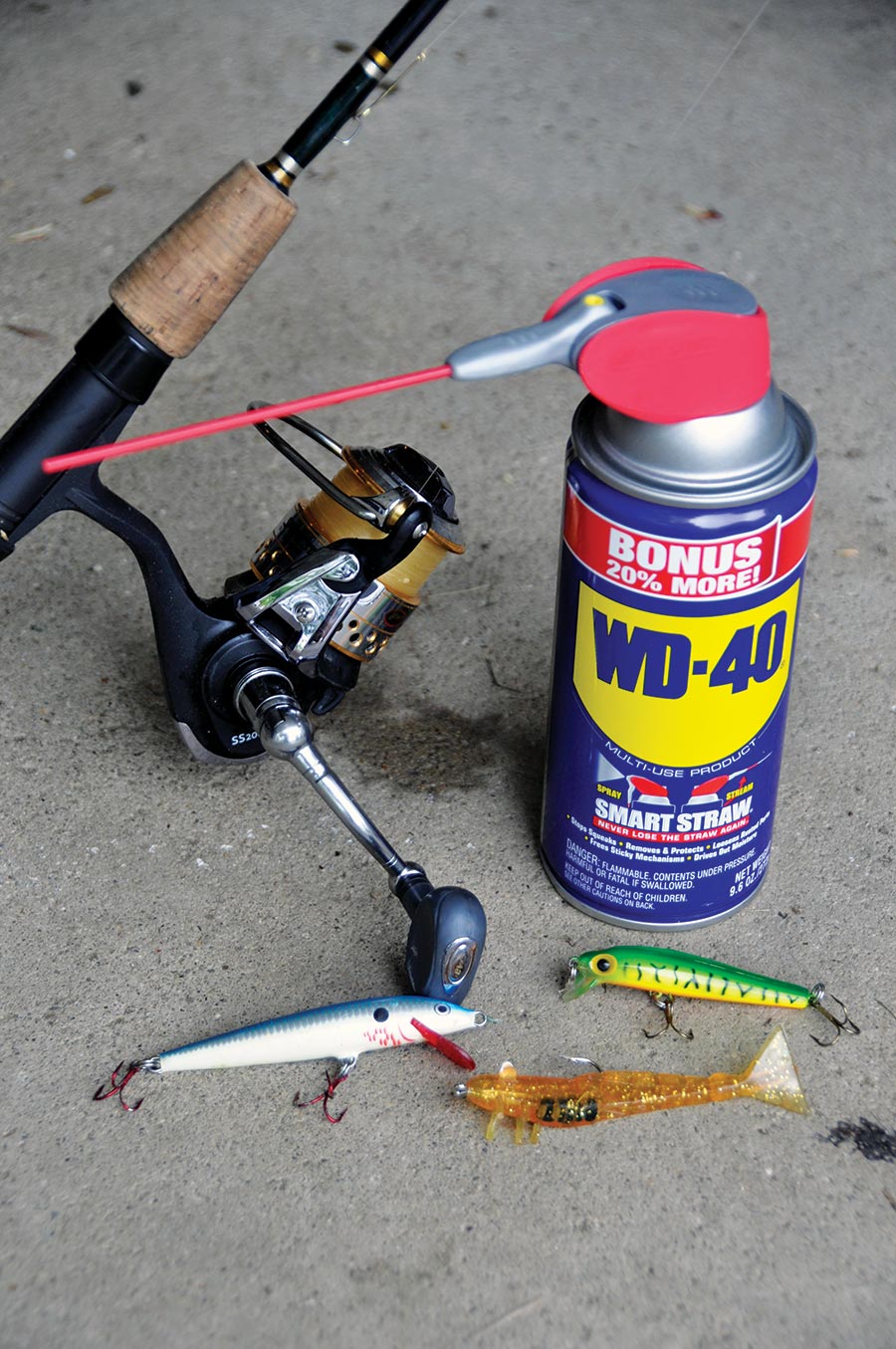


Scented baits, dips and doughs are available in dozens of scents formulated to attract predator fish. While fragrances of nightcrawler, crawfish or shad seem to make sense, what’s up with anglers coating their baits in non-traditional scents? The most famous off-the-wall “dip” has got to be WD-40. Developed to displace water (hence the WD or ‘water displacement’ moniker), it took 40 tries to get it just right for its intended purpose. If you’ve worked much with WD as a lubricant you are familiar with its strong, distinctive aroma. WD reeks of its chemical composition and is among the last things in which I would think to bathe a fishing bait.
However, there are anglers who wouldn’t consider wetting a line without first wetting their bait with WD-40. They have proven to themselves that the lubricant serves double-duty as a powerful fish attractant and don’t give a darn what their detractors say.
That said, I have yet to spray down a bait with anything other than a formula developed to attract fish rather than displace the water from whence they come.

- Length:10’ 2”
- Beam:5’ 2”
- Weight:500 lbs.
- Power:Torqeedo Ultralight
- MSRP:$7,999
810-204-3848 – www.bokamarine.com
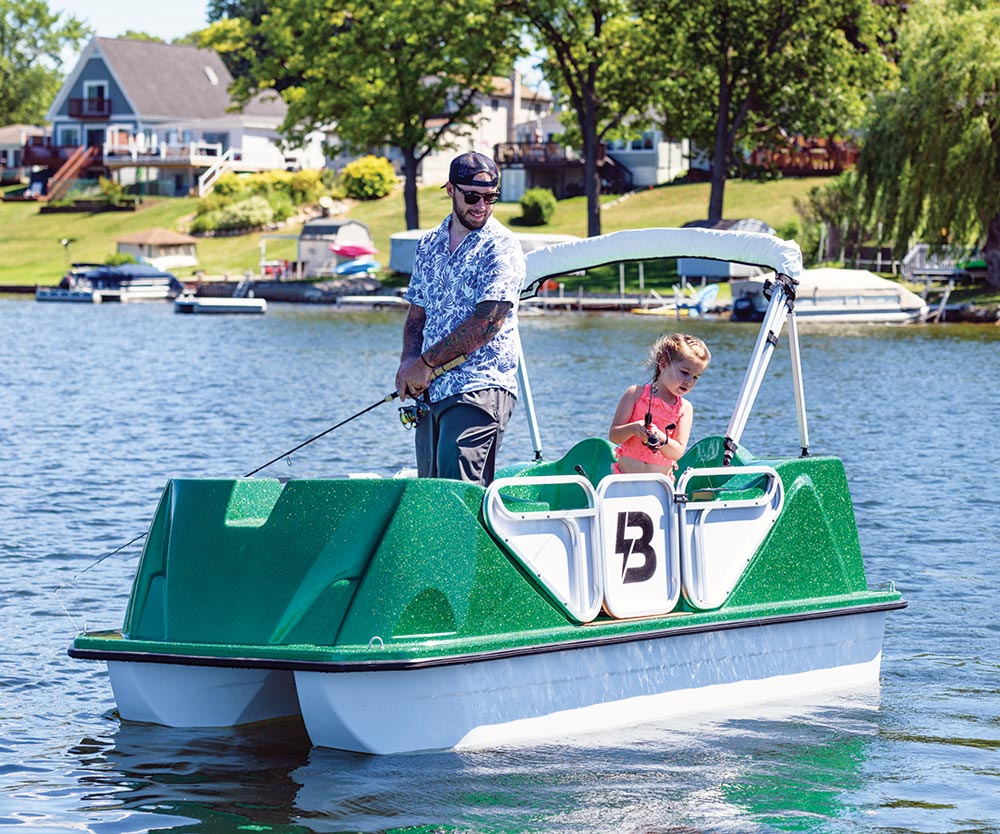
Each fully-charged battery can provide up to four hours of on-the-water enjoyment and reach speeds of up to 6 mph. Additional batteries are easily swapped out on the fly, says Boka, which adds that its e-boats also can be customized with a solar-powered electronics package that includes bluetooth speakers, navigation lights, and LED interior and exterior accent lights.
By the way, the buyer gets to pick out the boat’s color, at no extra charge. Additional options include a built-in cooler, canopy, table, and storage cover. New orders, which are initiated online, are delivered directly to the consumer from it website.
Boka e-boats are designed to accommodate up to four people and nearly 660 pounds. That said, two anglers is tops in my book for a reasonable fishing experience aboard the petite pontoon.
- Length:10’ 2”
- Beam:5’ 2”
- Weight:500 lbs.
- Power:Torqeedo Ultralight
- MSRP:$7,999
810-204-3848 – www.bokamarine.com