


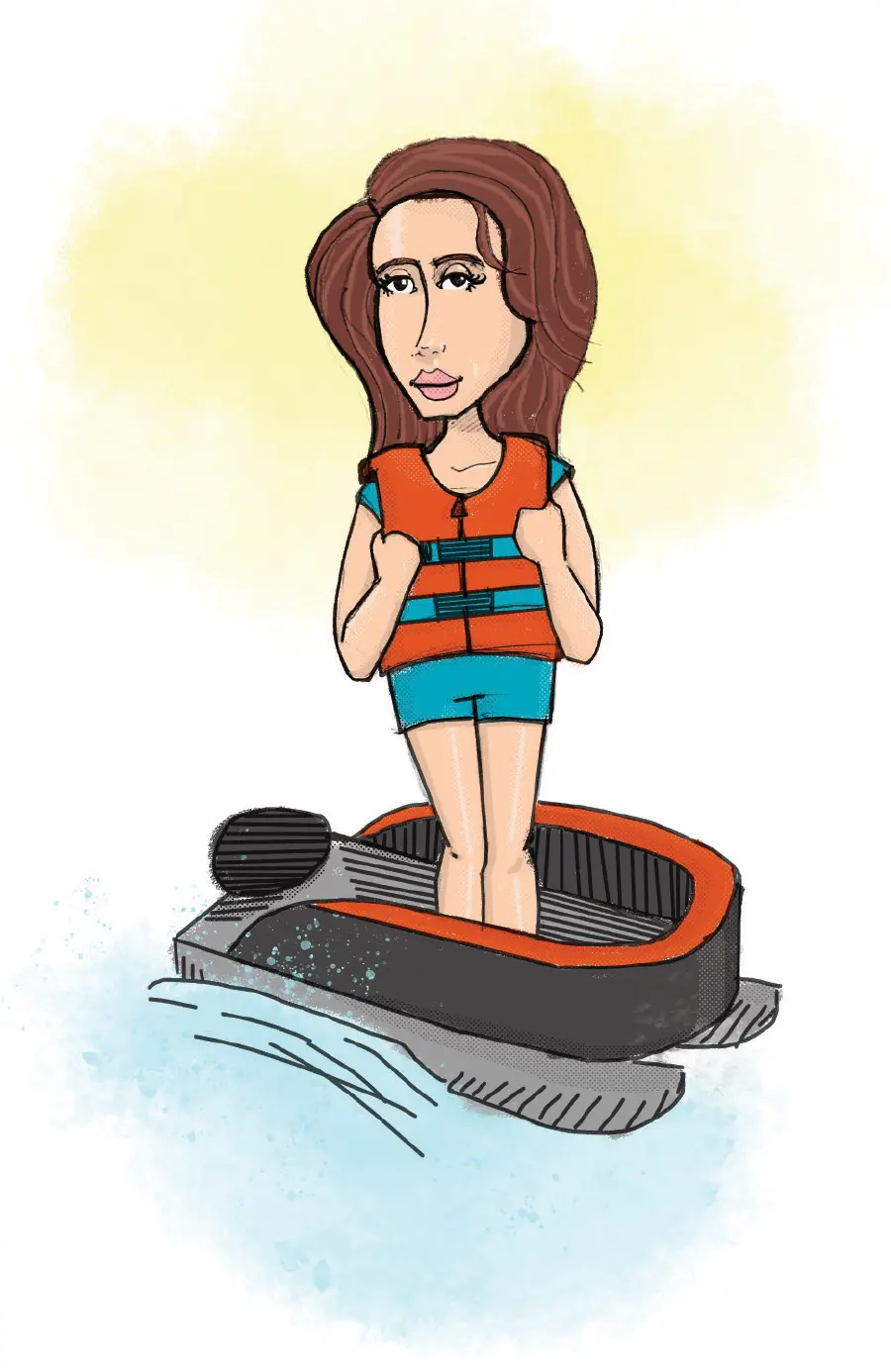
When I was growing up, my family always connected the two activities. My dad was both an avid biker and a proud captain of his sailboat, so he made every weekend excursion to the lake a dual recreational opportunity. Every time we went boating, we also brought along the bikes. Try this with a family of seven and trailering becomes a bit of an ingenious Tetris game: one truck, one camper, one sailboat, seven people, seven bikes, and plenty of bungee cords.
I loved pedaling my bike through the campsite, around the lake, and out to the docks while my dad set up the mast, clipped in the mainsail, and fiddled with the rudder. It always took forever to ready the sailboat for a launch, and I certainly didn’t want to waste time standing around.

Which is why one particularly windy day found me with my turquoise Raleigh (newly purchased from my hard-earned paper route money) at the end of the dock. The blustery morning made whitecaps across the waves, but I still didn’t think anything of propping my bike up on its kickstand. After all, wasn’t I always getting yelled at for leaving it haphazardly lying on the lawn?
An upright bike, an unprotected dock, and a stiff wind made an unfortunate combination. It took only seconds for a sudden gust to push my bike into the water where it sank with one sad little splash. I looked after it slightly more than horrified. My swimming skills weren’t stellar enough for me to dive into 15 feet of murky lake water in hopes of finding my bike, which was surely resting on the muddy bottom by then.
How do you rescue a bike lost to the depths, even when you know definitively where it is? After a bit of yelling and a lecture on taking better care of my bike (obviously), my dad set to thinking. He was a Boy Scout, after all, which meant he was prepared for not only the foreseen hazards, but also an untold number of this-could-never-happen scenarios.
In the end, he made do with 20 feet of rope, a fluke anchor, and a comical game of fishing with my brother’s help. We made quite a sight on the dock that day, once the anchor successfully grabbed hold of the front tire, as we reeled in our catch.
Who, after all, goes fishing for bikes? Or fishing for anything other than, well, fish?
More people than you’d think, apparently.
Recently I came across a guy on social media who gleefully goes magnet fishing in the Netherlands. As one of the most bike-friendly countries in the world, Dutch cities are also famous for canals and are evidently populated by people like me who lose their bikes in the water. @Bondi Treasure Hunter fishes hundreds of bikes each year out of the water, along with the occasional shopping cart or metal safe. This is in addition to dredging up thousands of bottle caps, jewelry, coins, keys, knives, chairs…an endless list of detritus lost in the water.
Aside from gaining social media views, a happy result is that he’s removing trash and corroding metal from the canals to leave them cleaner than he found them. And he’s not the only one. Magnet fishing has become a popular outdoor activity: people love the thrill of discovery (even if it’s junk), the possibility that they might find something rare, and the ability to clean up waterways.
Boating and fishing would hardly be enjoyable among rivers of trash, and many conservation groups encourage people already spending time on the water to take a few extra moments to pick up litter. Plishing is a summer-long challenge run by the South Carolina Wildlife Federation that encourages anglers to help keep waterways clean by picking up litter while they’re fishing. The organization Plastic Whale asks the public to collect as much plastic waste as possible to ensure lakes and rivers are uncontaminated for generations to come.
I’m glad we didn’t abandon my bike to a watery grave—not just because walking my paper route would have taken way more time, but also because there’s no need to leave something to rot at the bottom of a lake if you can avoid it. Consider how wonderful it would be if we tried our best to keep garbage out of the water, or at least fished it out every time it was possible. Thousands of boaters doing just that could make a spectacular difference for clean, healthy water the world over. So the next time you’re out on your pontoon, make a special effort to gather up trash, even if it’s not yours, and take pride in keeping the outdoors beautiful.