


I’ve got a hard-core fishing buddy who slays fish, from crappies to bass, bluegills and saugeyes, year-round from the same man-made Midwest reservoir – and practically anywhere he travels to wet a line. Whether vertically snapping his favorite blade baits up and down through a hole during mid-winter ice-up or from the deck of his pontoon boat, he knows the simple, shiny slivers of metal will likely catch the most fish, in the greatest variety, for his effort this time of year until well past ice-out.
Blade baits consist of a metal head or body molded to a thin metal blade that is stamped into the profile of a baitfish. As such, blades have proved especially appealing to any gamefish species – large or small – that prey on minnows. Larger blades are designed to fool walleyes, pike, bass and trout; smaller versions are deadly on crappies, smaller trout, and yellow perch. Blade baits are particularly productive in cold water periods, such as those experienced in autumn, winter and – early spring.
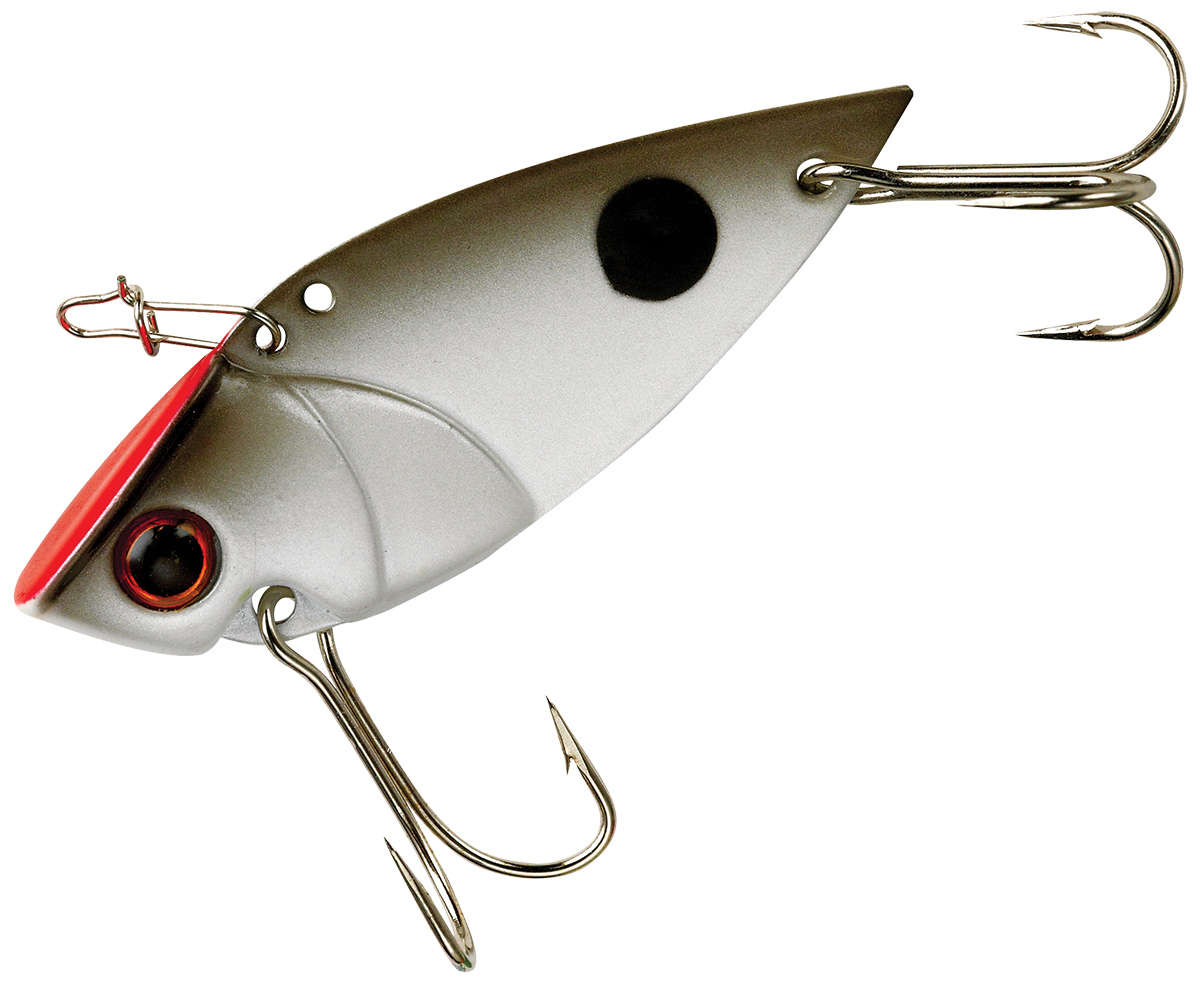
The metal lures are heavy for their size, and can be cast and retrieved or even trolled with some success, but most blade bait fishermen prefer to jig them vertically. Successful blade runners employ everything from a slow lift and drop motion to violently “snapping” the lures up off the bottom with quick, animated flicks of the wrist or arm, depending on the situation, to trigger fish into striking. Some anglers slow the blade’s fall, interrupting what would be a “natural” drop by adding action on the way down, or controlling the speed of its descent by keeping the line tight and dropping the lure at a slower-than-normal pace. I have found simply letting the metal blade drop at its own pace on a limp line to be the most productive jigging motion for me, whether fishing through the ice or from the deck of a boat. The take often happens on the glide down or after the first lift and drop off the bottom.
Some anglers tip the hook of their blade bait with a minnow, minnow head, or piece of worm to add some real meat to the presentation. Unless I’m using the slowest of jigging presentations, I’ve found that adding anything to a bare-naked blade presentation affects the ‘shivering’ motion and resulting vibration that makes the lures so appealing, and I will shift to a traditional lead-headed jig when a live bait ‘tip’ is required to tempt a bite from a finicky fish. But at times, a ‘dead stick’ presentation of a blade bait combined with a small chunk of worm or minnow or a perch eye fished just off the bottom on a second rod left in a holder will out-fish more complicated tactics.
Which makes blade baits one of the most adaptable lures you can have aboard this spring. Good luck!
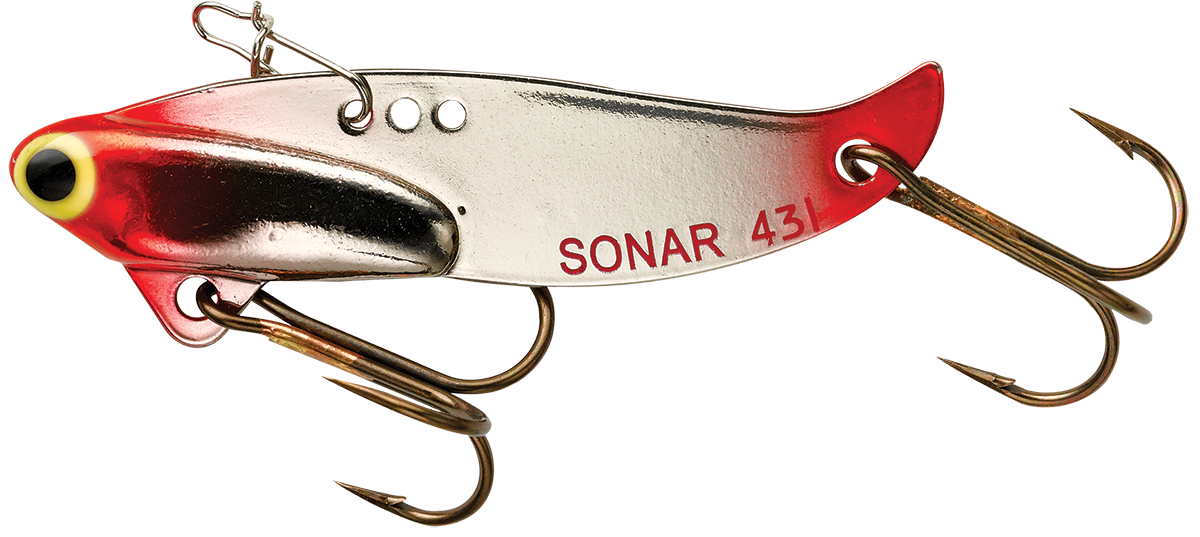
Heddon’s popular Sonar started the blade bait revolution half a century ago. Today, more than a dozen manufacturers make versions of the metal lures.

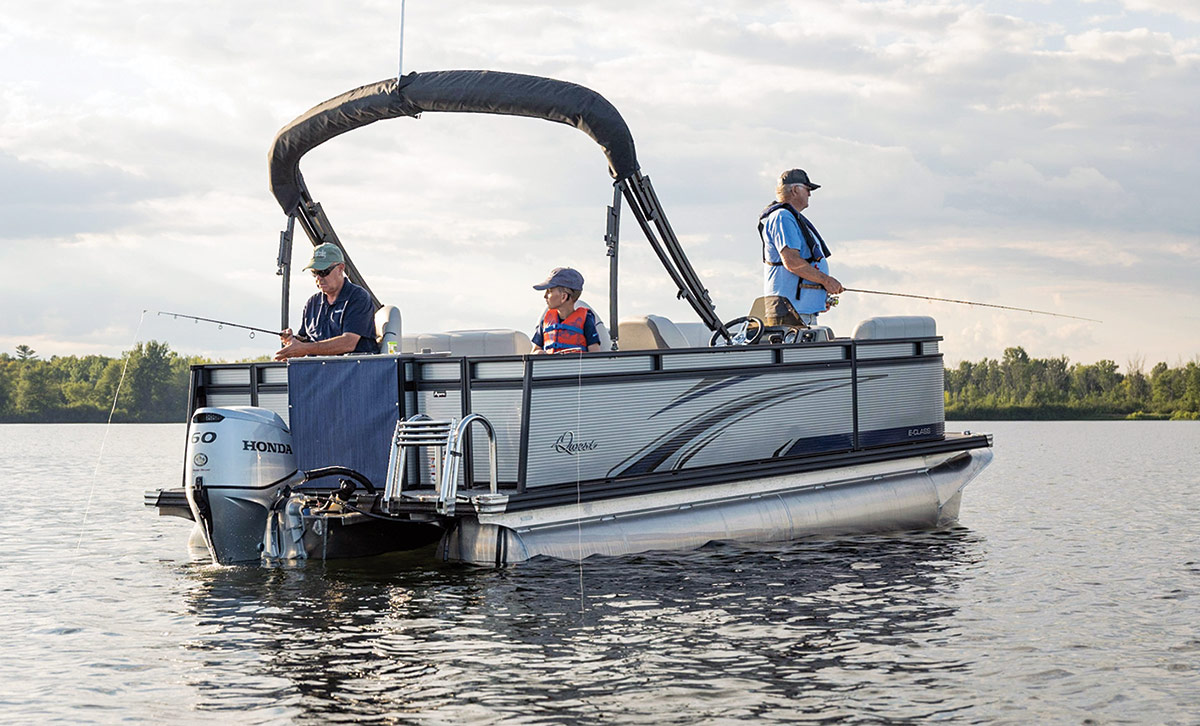
- LENGTH:19′ 10″
- BEAM:8′
- APPROX. HULL WEIGHT:1,730 LBS.
- MAX HP:75HP
- CAPACITY:9/1,250 lbs.
- FUEL:25 gals.
www.qwestpontoons.com
A Garmin Striker Plus 5 fish finder with GPS is standard, with Garmin 7 and 9 Echomaps with GPS Mapping and digital gauges unit optional – which could come in handy when seeking structure areas for dropping blade baits. With the two-tube version and sporting an 8-foot beam, the Qwest is lightweight and easy to launch and handle for solo anglers, yet offers a nine person capacity! An optional ski/tow bar is also available to allow you to enjoy more active watersports when the fish aren’t biting.
- LENGTH:19′ 10″
- BEAM:8′
- APPROX. HULL WEIGHT:1,730 LBS.
- MAX HP:75HP
- CAPACITY:9/1,250 lbs.
- FUEL:25 gals.
www.qwestpontoons.com