

Tackle Box logo
At The Whim Of
The Wind
By Dan Armitage
Fishing from a drifting boat allows anglers to cover a lot of water in a quiet, relaxing manner that is productive and great for kids or casual anglers.
At The Whim Of The Wind
By Dan Armitage
man wearing life vest fishing off of boat
You can place rods in holders when drift fishing to allow anglers to relax, and the moving boat often helps set the hook when a fish strikes.
April was a time to break out the kites when I was a kid, as Mother Nature often offered a combination of warmish sunny days and breezy conditions to lure us out of our winter confines and get us active on neighborhood lawns. Most of us built our own kites, a craft learned in Cub Scouts, which was part of the fun. I had no way of knowing that decades later I would use some of those early kite-flying skills to skip flying fish and ballyhoo over offshore waves to fool billfish and tuna on lines dangled from kites flown from boats drifting on the edge of the Gulfstream.

It’s a popular, stealthy presentation often required to catch finicky offshore fish without the sounds and vibration of an engine or a tell-tale length of line leading the baits to tip them off, all the while covering water to find active fish.

Drift fishing has been called “a lazy man’s” way to hook-up, due to how sedentary it appears. And that’s true for those who want to keep the fishing simple. Note that I said “fishing.” V Catching while adrift in a boat can be as active as the angler wishes.

For example, drift fishing is a great way to scout new waters, for it forces you to slow down to a pace set by Mother Nature. It also leads you to cross – and investigate – water and cover that you may usually overlook, or even outright avoid, when under power making a beeline to where you think the fish are.

When on assignment for PDB on unfamiliar waters where I have no idea where to start fishing, I often motor out to an open area anywhere from 10 to 20 feet deep, shut down the boat, drop a line and drift with the wind as I pore over a chart or set up a plan for fishing the area. Sometimes I never get past the drift tactic, which often produces the fishing “fix” I need and the fish photos my editors expect me to produce.

Because the boat is moving, courtesy of the breeze or current or both, you don’t need live bait to produce the action needed to attract fish as you often do when fishing from an anchored craft. I usually start out with a jig just heavy enough to tap bottom at the drift speed the wind produces, and tip it with a rubber twister tail or a Berkeley Gulp! or PowerBait. If I have bait, such as nightcrawlers or minnows, I’ll try both until one produces. I place the rods in holders and relax, watching them for bites. Often, the fish hooks itself as the boat’s progress sets the hook.

closeup of fish with jig fishing lure in its mouth
closeup of brightly colored jig fishing lures
Jigs are popular drift fishing lures because they don’t require much speed to give them fish-attracting action, and can be tipped with a plastic grub or live bait to add to the bait’s “allure.”
As such, drift fishing is simple, easy, relaxing and perfect for kids or casual anglers, who can put their rods in a holder and enjoy other activities aboard between bites while “fishing.”

On a fly-in fishing trip to Northern Ontario in a Cedar Strip Boat when my son was a toddler, we placed the lad on the bench seat between my wife and me. We then set up a portable fish-finder, clamped fishing rod holders to the gunwales and rigged rods with various presentations to fool the trophy-size brook trout that were said to be swimming below. To assuage the five-year-old wannabe angler while Mom and I experimented in attempts to hook-up, we baited his Zebco spincast outfit with a plain minnow below a couple of split shot and let him drop the line on the up-breeze side of the boat.

Any parent knows what happened next, and we spent the balance of the afternoon drifting plain minnows over open water, catching suspended squaretails that never even showed up on our screen.
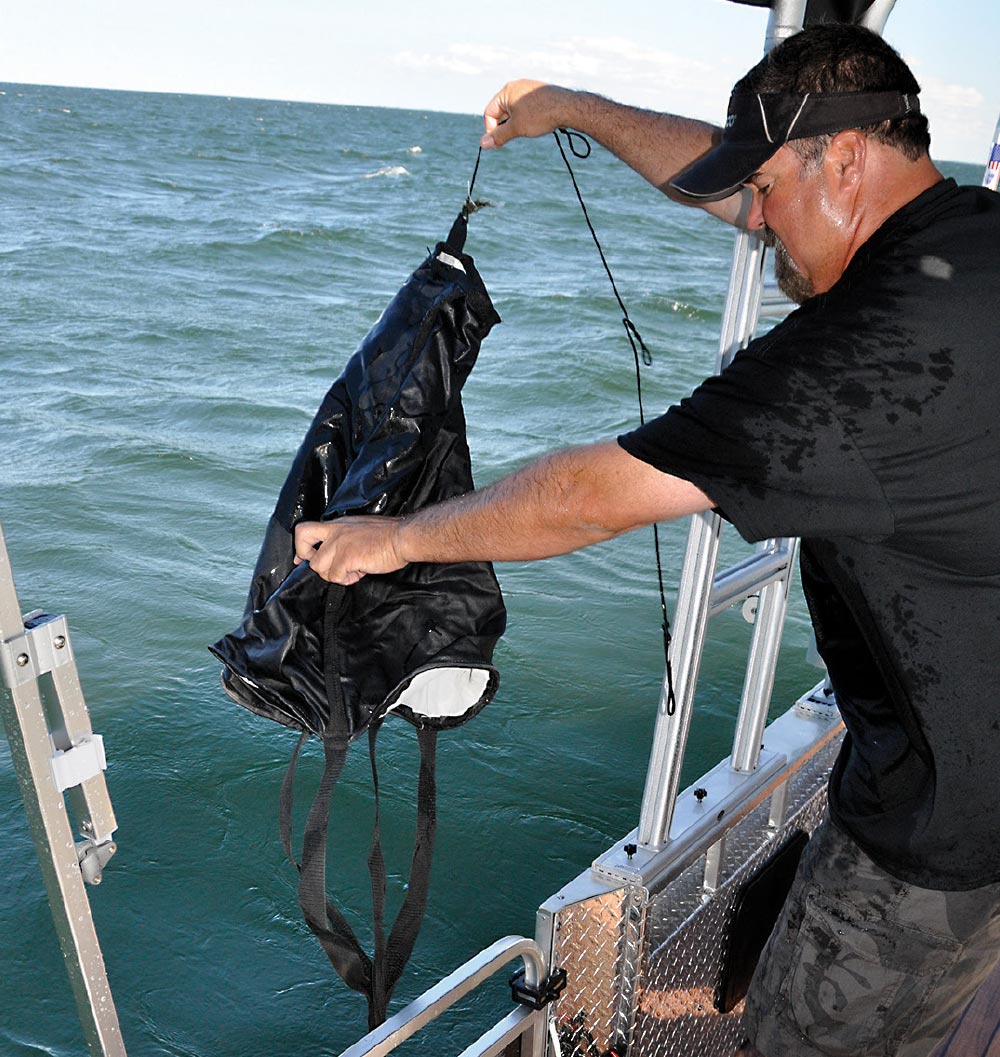

man lifting drift sock from water
When the breeze kicks up you can slow your boat’s drifting pace down to fish-catching speed by dragging a bucket or drift sock or using an electric trolling motor.
Slow It Down
When the breeze kicks up a bit and begins to blow the boat at a pace only a wahoo could keep up with, there are several ways to slow down the drift. The simplest is to use a stout line and drag a five-gallon bucket (or two) over the side. Drift socks accomplish the same thing, using a cone-shaped fabric bag tossed over the side to create the desired amount of drag. Some anglers facing a stiff breeze use the “slip-drift” tactic using their electric trolling motor set to only enough power to keep their bow pointed into the wind and slow the pace of their downwind, transom-first drift.
Dan’s Pick
people sitting on Starcraft SVX 211 OB Deck Boat
Starcraft SVX 211 OB Deck Boat
I’d drift fish, bottom fish, bobber fish, cast or cruise in this dandy new Starcraft deck boat available with several fishing features. The SVX 211 fiberglass hybrid combines the spaciousness of a deck boat with the agility of a ski boat, offering versatile fun on the water – including fishing. The boat sports a pair of fishing-specific seats fore and aft and the bow is rigged for a trolling motor and a livewell, while underwater lighting is available for after-dark angling.
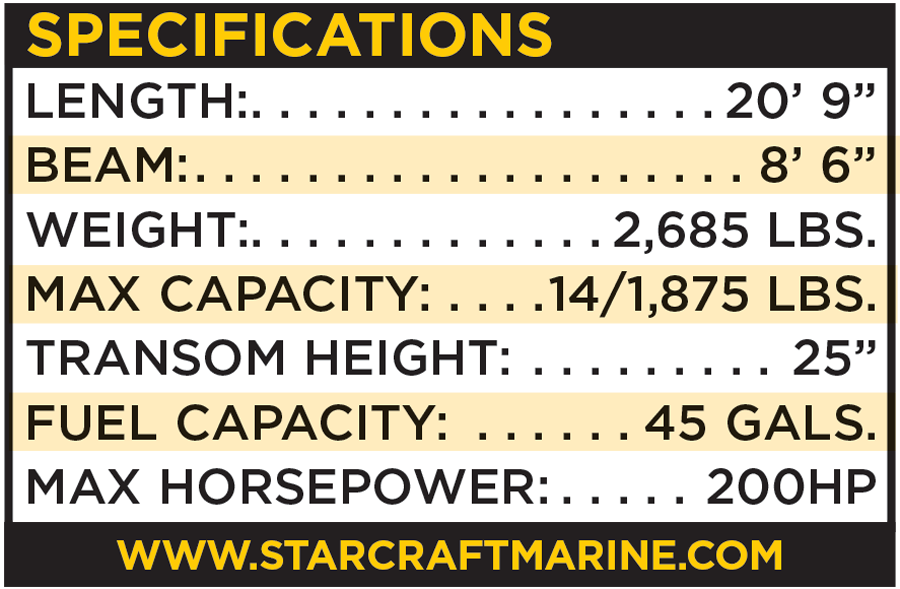
Starcraft SVX 211 OB Deck Boat specifications table
The Starcraft comes loaded with value, including features such as a four-speaker stereo, a Bimini top for sun protection and EVA Soft Touch Traction Mat flooring in the bow and stern, which are all standard. What’s more, the price is right for a cool looking and performing deck boat from one of my long-time favorite deck boat manufacturers.
Starcraft SVX 211 OB Deck Boat specifications table