


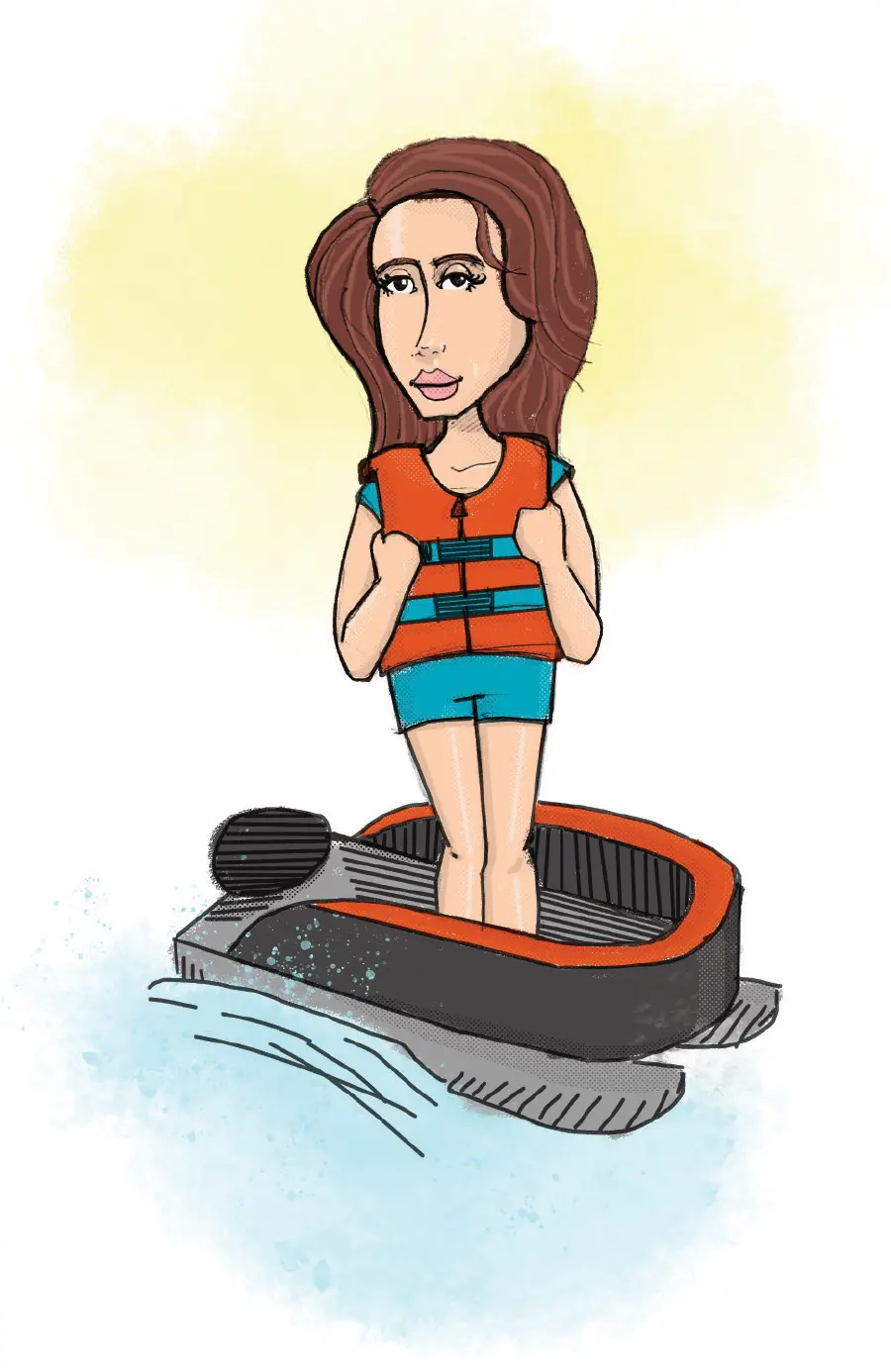
But docking makes me break out in a sweat. I know that practice makes perfect, but it just feels like the more often I go boating, the more opportunities I have to make mistakes.
Take, for example, this last time I went with a handful of teenagers. The afternoon had been beautiful and everyone was pleasantly exhausted and ready to call it a day. As captain, I felt the whole cruise went without incident— smooth turns, perfect throttle control, no drinks spilled. But when we approached the dock, it was as if the lake sensed my insecurities. Every boater within a quarter mile stopped what they were doing to watch my approach.
Now I’ll admit to cackling at as many boat fail videos as the next person. Yes, it’s hilarious when a boat careens into the dock at full speed and smashes a few fenders (because it’s not me). And I have giggled when I see a boat come in sideways but ends up backwards (also glad it’s not me). But when people started to stare at my approach, including fisherman clearly not “minding his own business,” I was more than a little annoyed.
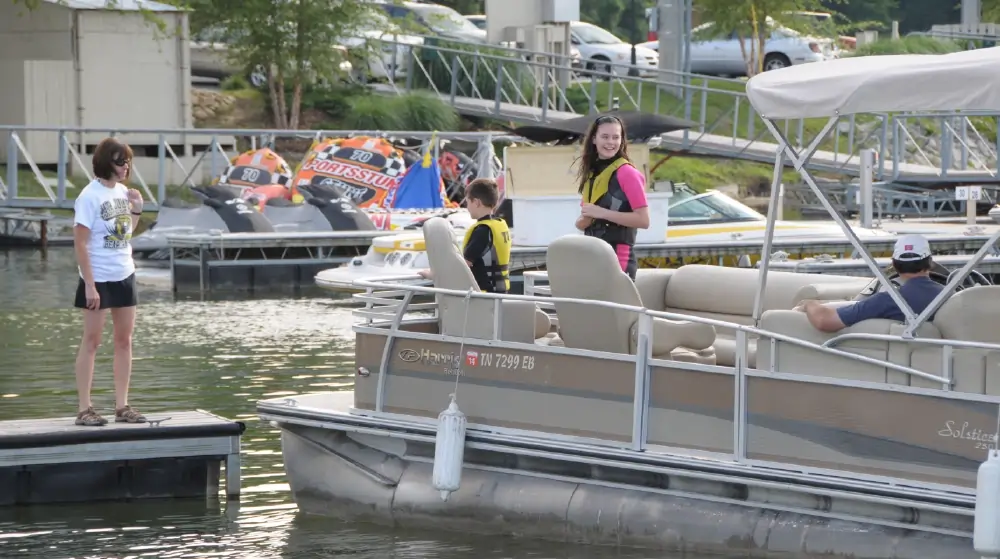
Pontoon boats are particularly special in this scenario because they are large, flat, and move with all the urgency of a floating picnic table. Once my boat decides to go somewhere—even somewhere incorrect—she commits.
And true to form, there were at least four of my passengers who have docked a boat zero times but felt qualified to form a committee and give me advice.
“You’re coming in too fast.”
“No, you’re drifting.”
“TURN THE OTHER WAY.”
“WHICH OTHER WAY?!”
Helpful. All of it. With the current, my anxiety, and so much worthless advice, I felt like I was attempting advanced trigonometry while gripping the wheel as if it owed me money. I was trying to calculate wind direction, boat momentum, dock angle, and whether or not my insurance deductible was low enough to be funny later. It took all of my energy not to scream at everyone to, “Sit down and shut up!”
And my audience grew. A nearby pontoon stopped entirely, pretending to “check something” while I knew they were quietly judging my technique. A speedboat idled past just slowly enough to create the exact wave I didn’t need. Every teenager on board gave me a kind of rapt attention their math teacher only dreams of. The dock line slipped into the water and became a limp, soggy mess. One of the fenders escaped and floated away like it knew it was better off without me.
Eventually, through skill, luck, or divine intervention, the boat made contact with the dock. Sure, we rammed into it with more force than I intended, and the crunching noises of the rubrail didn’t sound great. But everyone on board pretended it was intentional. I tied the lines with confidence I did not feel.
“Textbook,” my ever-encouraging husband said. Which was a lie, but a kind one.
Once our soggy dock lines were secured, I stepped off the boat in the most casual way possible, as if this whole endeavor had not raised my blood pressure by 40 points.
The truth is, no one is great at docking all the time. Anyone who says they are is either lying or has never docked in wind, current, or public view. Docking isn’t about perfection. It’s about survival, teamwork, and pretending you meant to do that weird sideways thing at the end. So the next time you’re sitting on your pontoon watching someone else struggle at the dock, remember: your turn is coming.