


BB: Better Boater
Maintenance Myths
What really matters—and what you can skip
By Shannon Mitchell
Spend enough time around a marina, boat ramp, or on an online boating forum, and you’ll hear plenty of pontoon maintenance advice. Some of it is solid. Some of it is decades old. And some of it can have you spending more time polishing than actually enjoying your boat.

The good news? Keeping a pontoon in great shape doesn’t require obsessive maintenance. A handful of smart habits will protect your investment far better than chasing every “must-do” tip that’s passed around the dock. Let’s separate fact from fiction.

A polished, reflective aluminum pontoon tube mounted on a boat trailer.
Myth #1: Your Pontoons Need To Shine Like Chrome
There’s no denying the appeal of mirror-polished aluminum tubes. They turn heads at the marina and look fantastic in photos. But unless you’re entering a boat show, constant polishing isn’t doing much for your boat’s longevity.

For most owners, a thorough rinse after each outing—especially after boating in saltwater or silty rivers—is far more valuable than hours spent with aluminum polish. Washing away salt, mud, and organic buildup helps prevent staining and keeps the pontoons looking good with far less effort.

Myth #2: More Oil Changes Mean A Longer Engine Life
Changing engine oil is one of the most important maintenance tasks you’ll perform—but doing it twice as often as recommended won’t double your engine’s lifespan.

Modern outboards are engineered around specific service intervals based on operating hours and time. Unless your engine has been subjected to unusually harsh conditions, following the manufacturer’s maintenance schedule is exactly what it’s designed for. The key isn’t changing oil constantly—it’s changing it consistently.

A person pouring motor oil through a funnel into an outboard boat engine.
Myth #3: If Nothing Looks Wrong, Everything Is Fine
One of the biggest advantages of routine maintenance is catching small problems before they become expensive ones. A loose battery cable. A cracked fuel hose. Corrosion beginning on an electrical connection. A trailer tire that’s starting to dry rot.

None of these issues usually announces itself with dramatic warning signs, but all can leave you stranded if ignored. Taking ten minutes before and after a trip to walk around your boat often prevents the kind of repairs that ruin weekends—and budgets.

Myth #4: The Upholstery Can Handle The Sun
Water gets most of the blame, but sunlight is often the real enemy. Vinyl seating spends countless hours baking under ultraviolet rays. Over time, that exposure leads to fading, drying, and cracking that can dramatically shorten the life of your furniture.

A quality marine UV protectant and a properly fitted cover are among the simplest—and least expensive—ways to preserve your interior. Your seats will thank you years down the road.

Myth #5: A Boat Cover Is Just For Winter
Some owners only pull out the cover when the boating season ends. In reality, the cover earns its keep all year long. It shields your boat from sun exposure, bird droppings, leaves, pollen, tree sap, rain, and airborne debris. It also means less time cleaning before every outing and helps maintain resale value. Few accessories offer a better return on investment.
Myth #6: The Trailer Takes Care Of Itself
It’s easy to focus entirely on the boat while forgetting the piece of equipment that gets it to the water. Trailer tires age even when they haven’t been driven much. Wheel bearings need periodic attention. Brake systems, lights, winch straps, and safety chains all deserve routine inspections. After all, the perfect day on the water starts with arriving there safely.
A trailer wheel assembly supported by a hydraulic jack during brake maintenance.
Myth #7: Fuel Stabilizer Is Only For Winter Storage
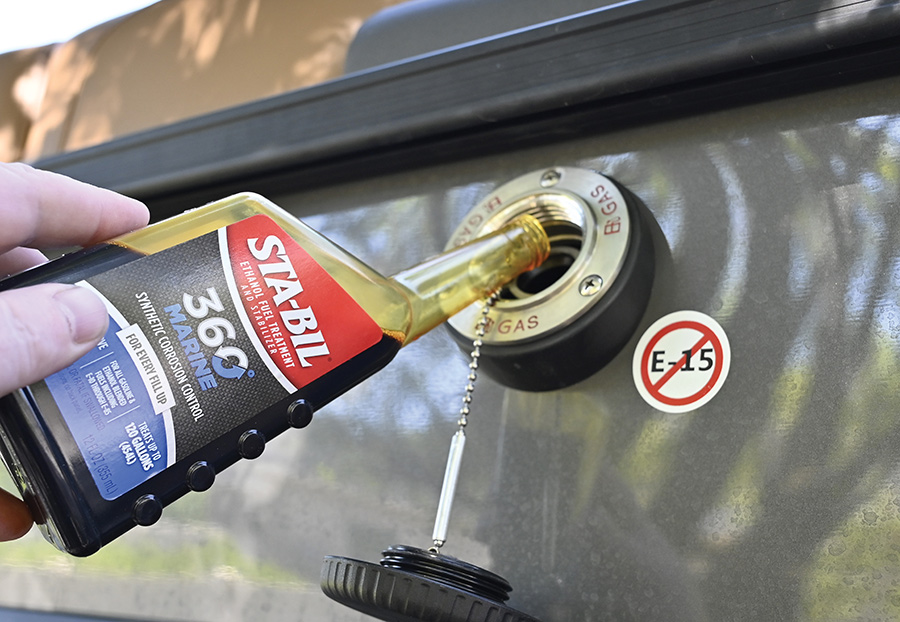
Modern fuel doesn’t always age gracefully—especially ethanol blends. If your pontoon sits for several weeks between outings, adding a quality fuel stabilizer can help prevent fuel degradation and varnish buildup. It’s inexpensive insurance that may save headaches later, particularly during long stretches between trips.
A person pouring marine fuel stabilizer into a boat's gas tank opening.
Myth #8: Pressure Wash Everything
Pressure washers certainly make quick work of dirt, but they’re not always the best tool for every surface. High pressure can damage vinyl, lift decals, force water into electrical components, or remove protective finishes. For routine cleaning, a soft brush, marine soap, and a garden hose usually produce better long-term results with far less risk.
Myth #9: If The Battery Starts The Engine, It’s Fine
Marine batteries rarely fail at a convenient time. Corrosion on the terminals, low voltage, or a battery that’s slowly losing capacity may not reveal itself until you’re miles from the dock.

Keeping terminals clean, maintaining a full charge during storage, and testing battery health at the start of each season can help avoid unpleasant surprises.

Myth #10: Every Squeak Or Noise Means Something Is Seriously Wrong
Boats naturally flex and move while underway. Minor rattles from seat bases, gates, or accessories are common, and not every sound indicates a major repair. However, new vibrations, unusual engine noises, steering resistance, or persistent knocking deserves prompt investigation.
Focus on the Basics
It’s easy to become distracted by cosmetic projects and Internet maintenance checklists, but the fundamentals remain the same. Keep the boat clean. Protect it from the sun. Follow the engine manufacturer’s maintenance schedule. Inspect your trailer. Check your electrical and fuel systems regularly. Fix small issues before they become major repairs. These simple habits will contribute far more to your pontoon’s longevity than any miracle polish or maintenance shortcut. The smartest owners know that good maintenance isn’t about doing everything. It’s about doing the right things consistently.