
William Smith
“I was working in a factory after high school and just wasn’t enjoying it,” William said. “So I decided to join the Marine Corps Reserves. Almost immediately I decided that I wanted to go active duty and haven’t looked back since.”
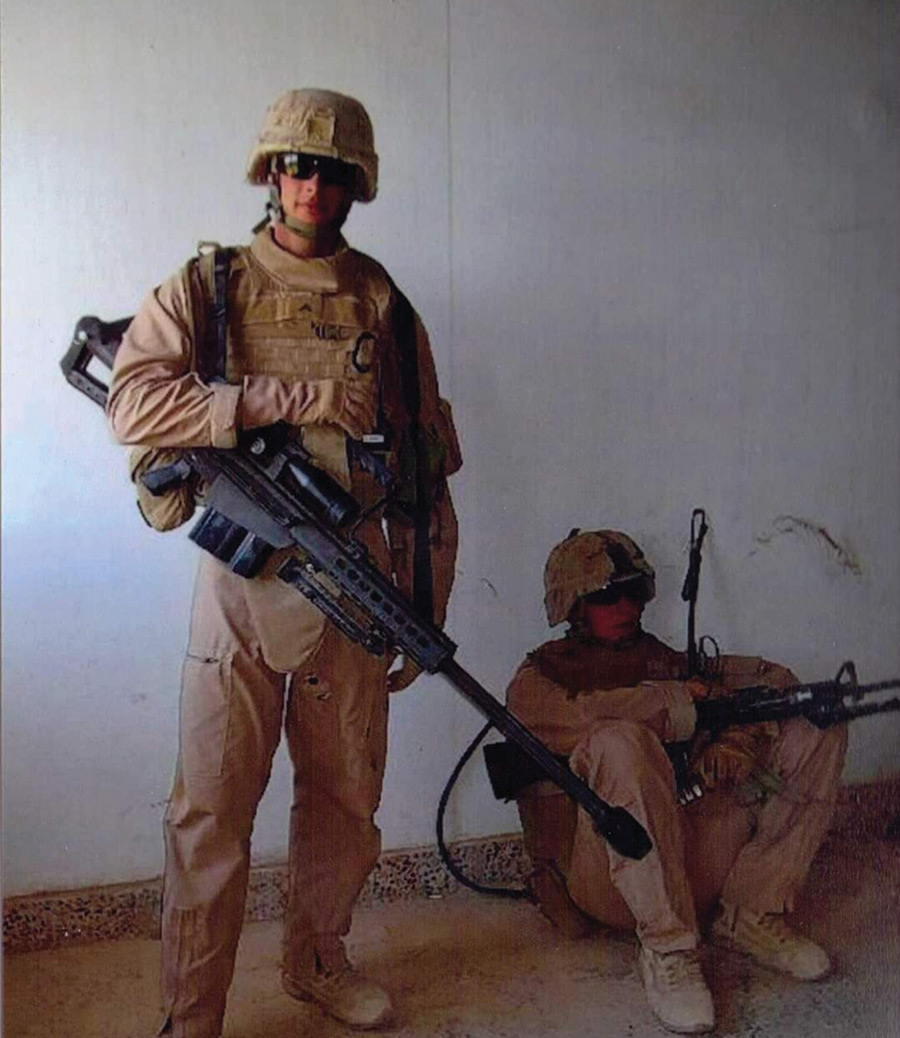
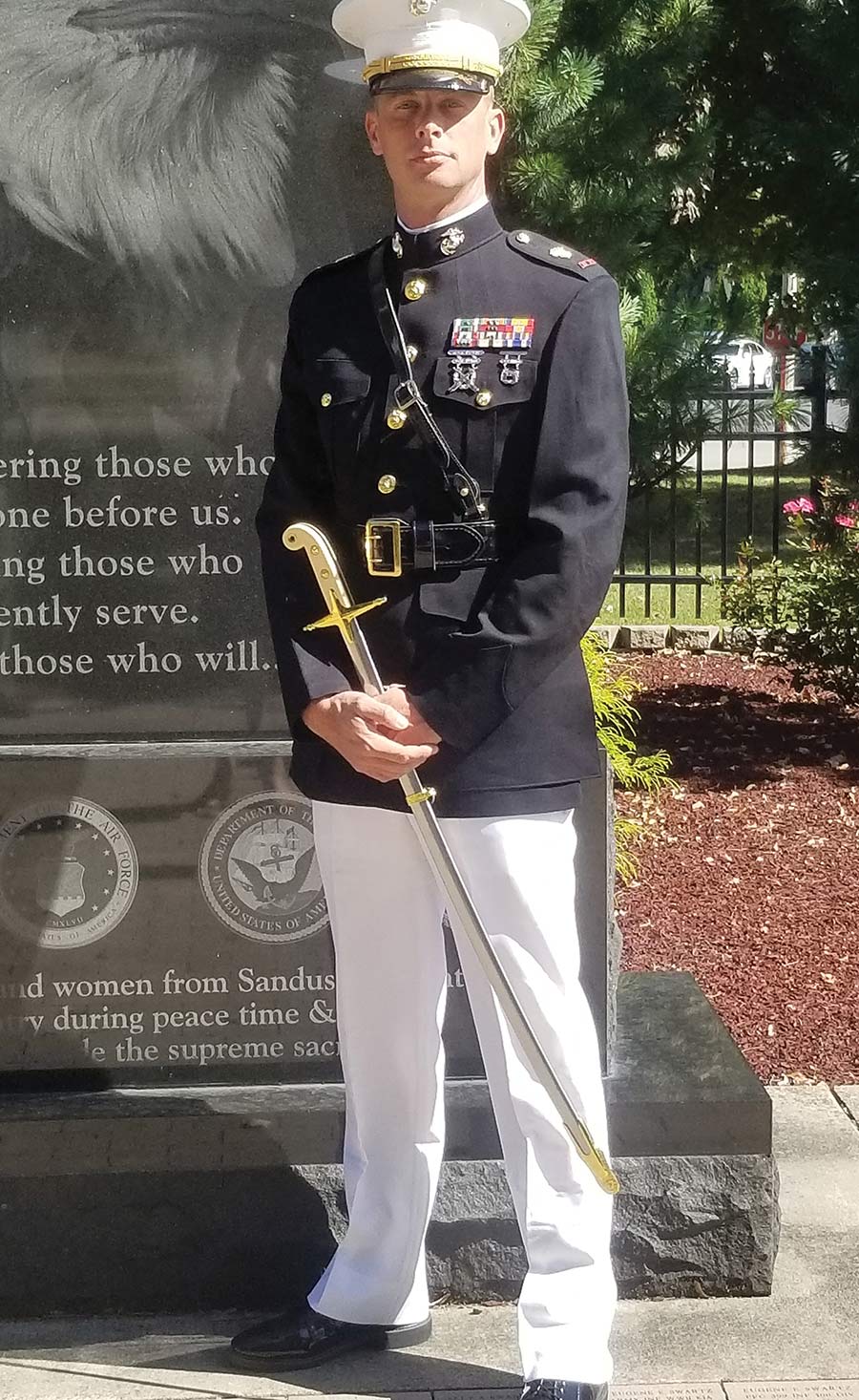
Even after 23 years of service, William is still active duty and serves as a Chief Warrant Officer in the Marine Corps. When he first enlisted, he began as a Light Armored Vehicle crewman and worked his way up to an operations chief and Master Gunner.
“I have been with different units helping commanders and Marines train on infantry weapons. I currently help design and control large-scale live-fire training events for the Marine Corps at the Combat Center in 29 Palms, Calif. and advise commanders and Marines on the best way to employ their weapon systems,” William explained.
Over the past two decades, William has been deployed six times: three in combat deployments, and three in non-combat deployments. He spent time on foot and vehicle patrols in Iraq during Operation Iraqi Freedom, where he visited the areas of the Al-Anbar province and the borders with Syria and Jordan.
“Some of my best memories were actually during some of the toughest times on my first deployment to Iraq,” William said. “We had rough times with long days and nights in temperatures well over 100 degrees. But I was able to form a tight bond with the guys I served with. In fact, I still talk to most of them almost 20 years later.”
During Operation Enduring Freedom, William was sent to Afghanistan in the Helmand province along the river valley doing counter-insurgency operations.
“Along the river there were farmlands, poppy fields, and small villages, while just a mile away was the open desert,” William said. “It was strange to see villages that looked like they could have been the same for hundreds of years. We patrolled this area because the Taliban was often there trying to shake down the small farmers for money, and our job was to intervene and prevent that.”
His non-combat deployments afforded a complete change of scenery. He did partner training with the Japanese defense force in Okinawa and on the 31st Marine Expeditionary Unit in the Pacific Ocean.
During his time on the Pacific Ocean, William said it was a little disorienting when he couldn’t see land in any direction. “I had been boating on Lake Erie, which was so big that you would often have to squint to see the horizon. But it was nothing like being on the open ocean where there wasn’t any land in sight.”
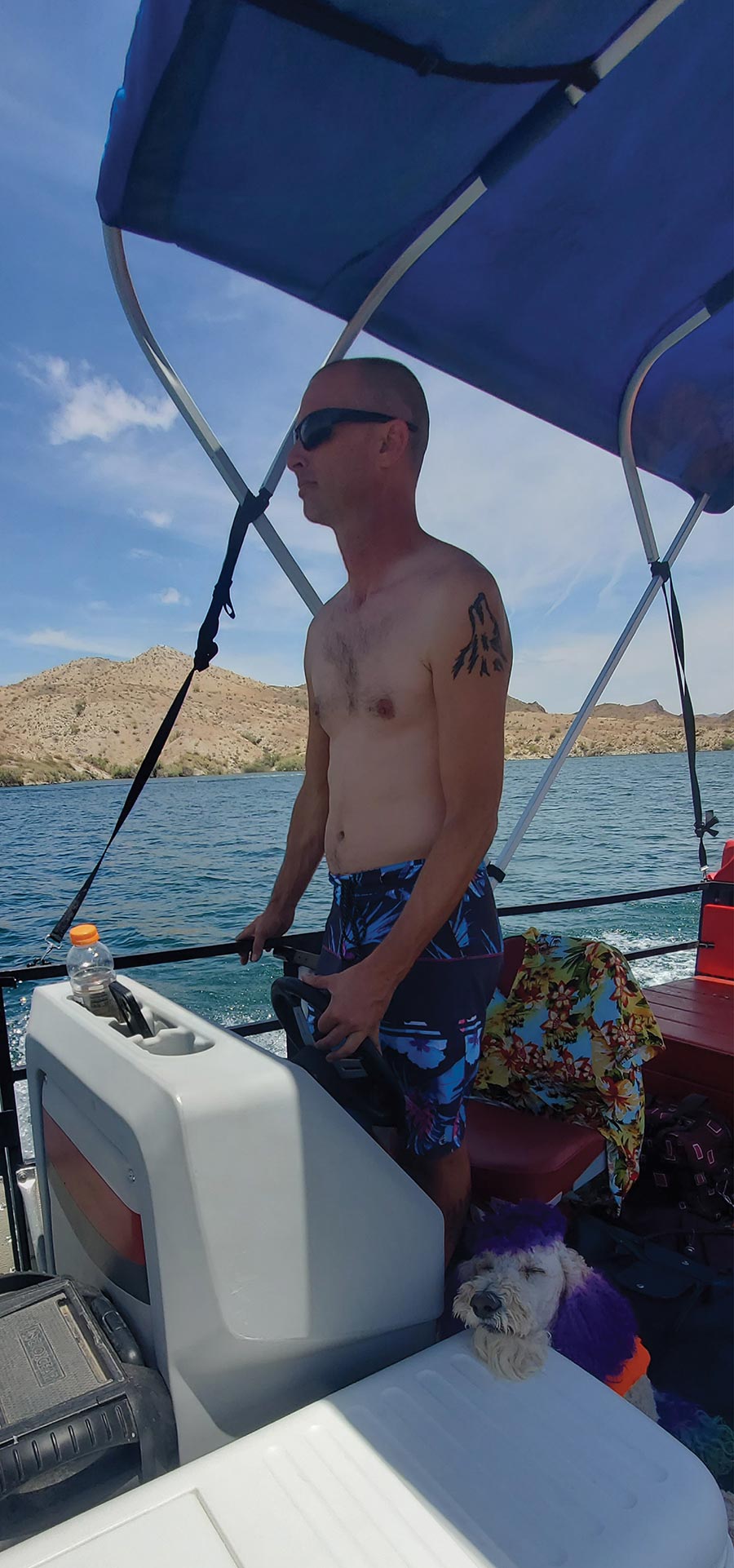
Now William owns his own boat and spends time on Lake Havasu, where he can definitely see the shoreline. “I always enjoyed boating, but it wasn’t until a friend of mine took me and my wife on his boat on Lake Havasu that we were hooked. It was shortly after around 2012 that I bought a used pontoon boat (without telling my wife!). But after the first time we took it out ourselves, I was forgiven and we’ve been enjoying it ever since.”
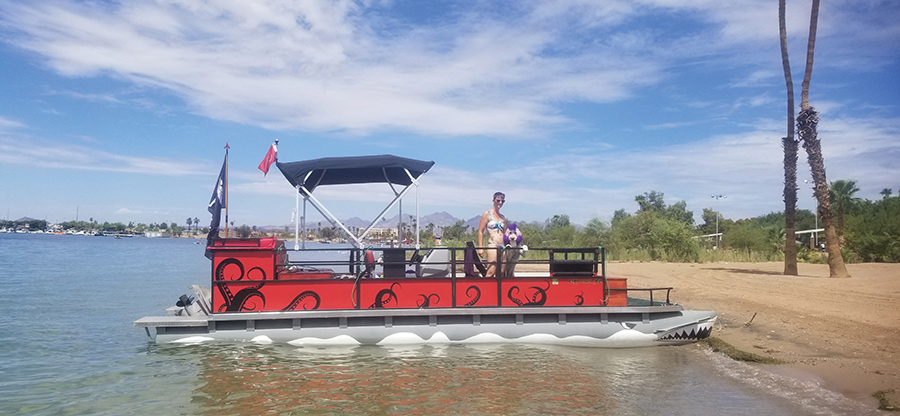
A few years after buying the 1987 Aloha with an Evinrude 88SPL, William tore it down to the deck and rebuilt it with plenty of flare. “I did the whole renovation—put in a new fuel system, redid all the electrical wiring, and built cedar benches for storage,” he said.
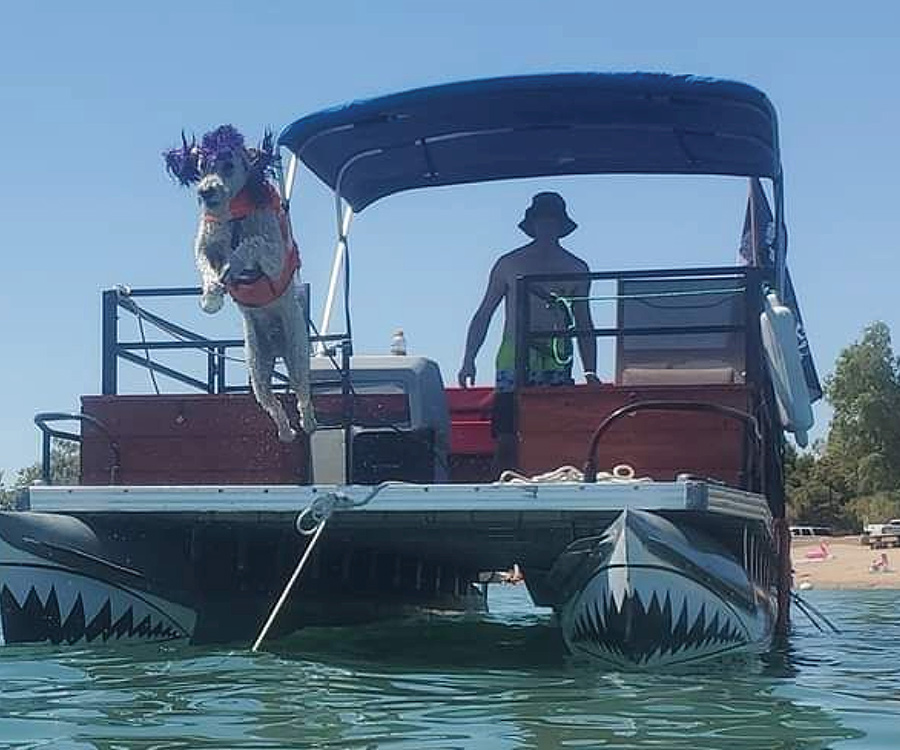
He wrapped the pontoon in bright red vinyl, but felt it looked a little plain. “I already had the idea of painting the logs to look like great white sharks, but I knew I needed to add something else to it. My wife Jessica thought it would be fun if it looked like a kraken was reaching up and grabbing the boat.” He found vinyl decals of leviathan arms and placed them around the rails. And people on the water definitely noticed.
“I get a lot of looks on the lake. Boaters will chat with us about our pontoon when we’re beached in the channel, and whenever little kids see us pass by, they get excited and wave at us,” he laughed.
William and Jessica love taking their three standard poodles out to the lake where they can jump off the boat. “We left the bow mostly open, and our dogs love to jump off the front and go swimming. We also do some fishing and camping on the shores of Lake Havasu, and sometimes just anchor in a cove and relax.”
Whenever they’re out on the water, two flags are always flying from the pontoon: William’s USMC flag and a Bartholomew Roberts pirate flag, which depicts a pirate sharing a drink with Death. “I just find it fitting, you know, considering the life I’ve had,” he said.
With a lifetime of service in dangerous situations defending our country, it’s surely a rewarding experience to be able to relax and enjoy time on the water.