

Many people use fuel additives to insulate their engine against harsh weather conditions during winter storage, but you can get so much more out of your fuel additives. They have a number of day-to-day applications as well. This is especially important information for new boaters, who may not know how to protect their watercraft from common problems that more seasoned boaters have experienced firsthand. Knowledge is key here, so we’ll help with some recommendations for what to use and how to use it.
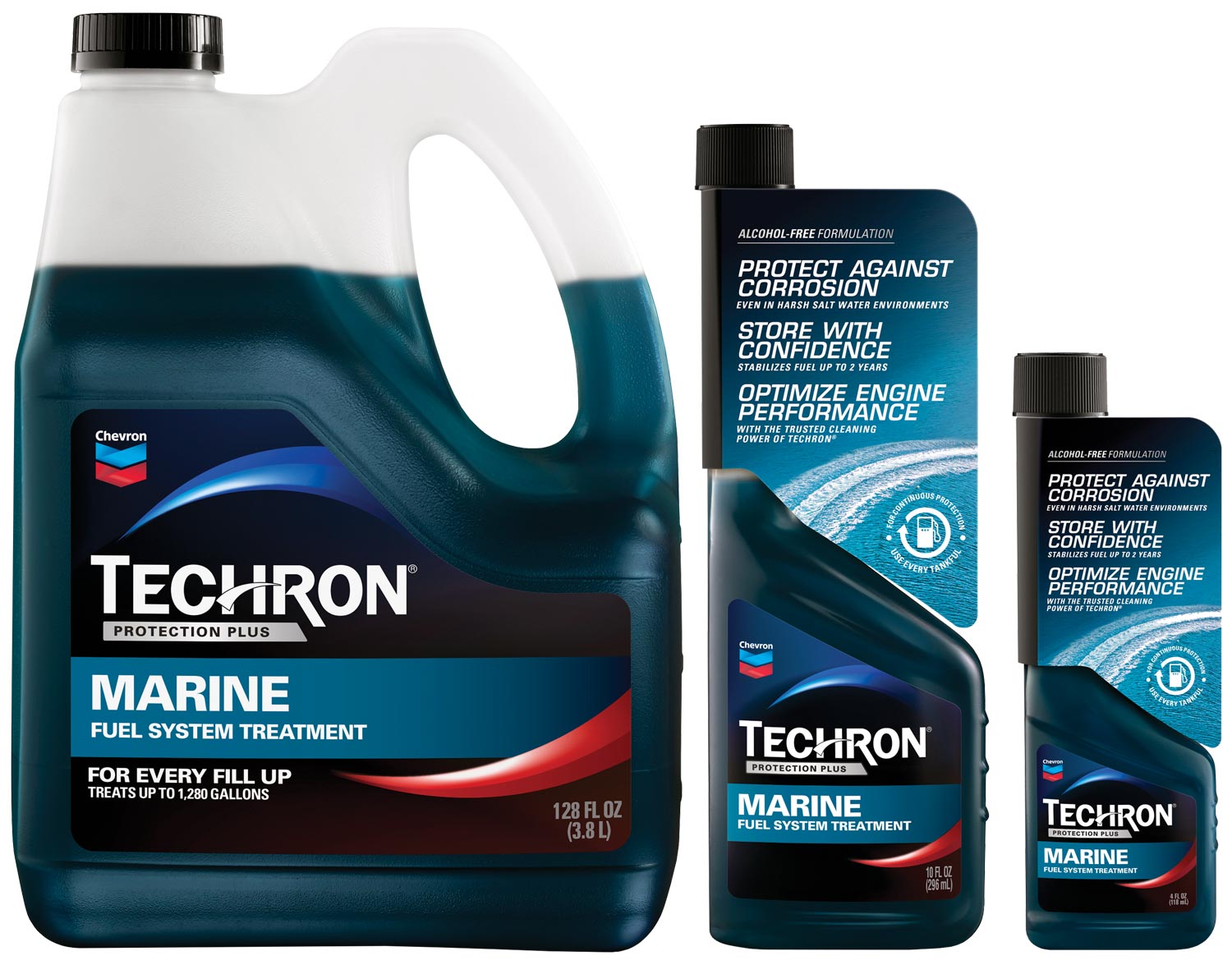
But before you buy any fuel additive, you need to determine your specific needs. There are different formulas custom-built for different engines. First and foremost, you’ll need a marine fuel additive–for example, the Techron Protection Plus Marine Fuel System Treatment. Marine additives are designed to work in environments where you’re dealing with lots of water. Water can leak into the tank, causing water buildup that damages injectors and causes rust and mineral buildup.
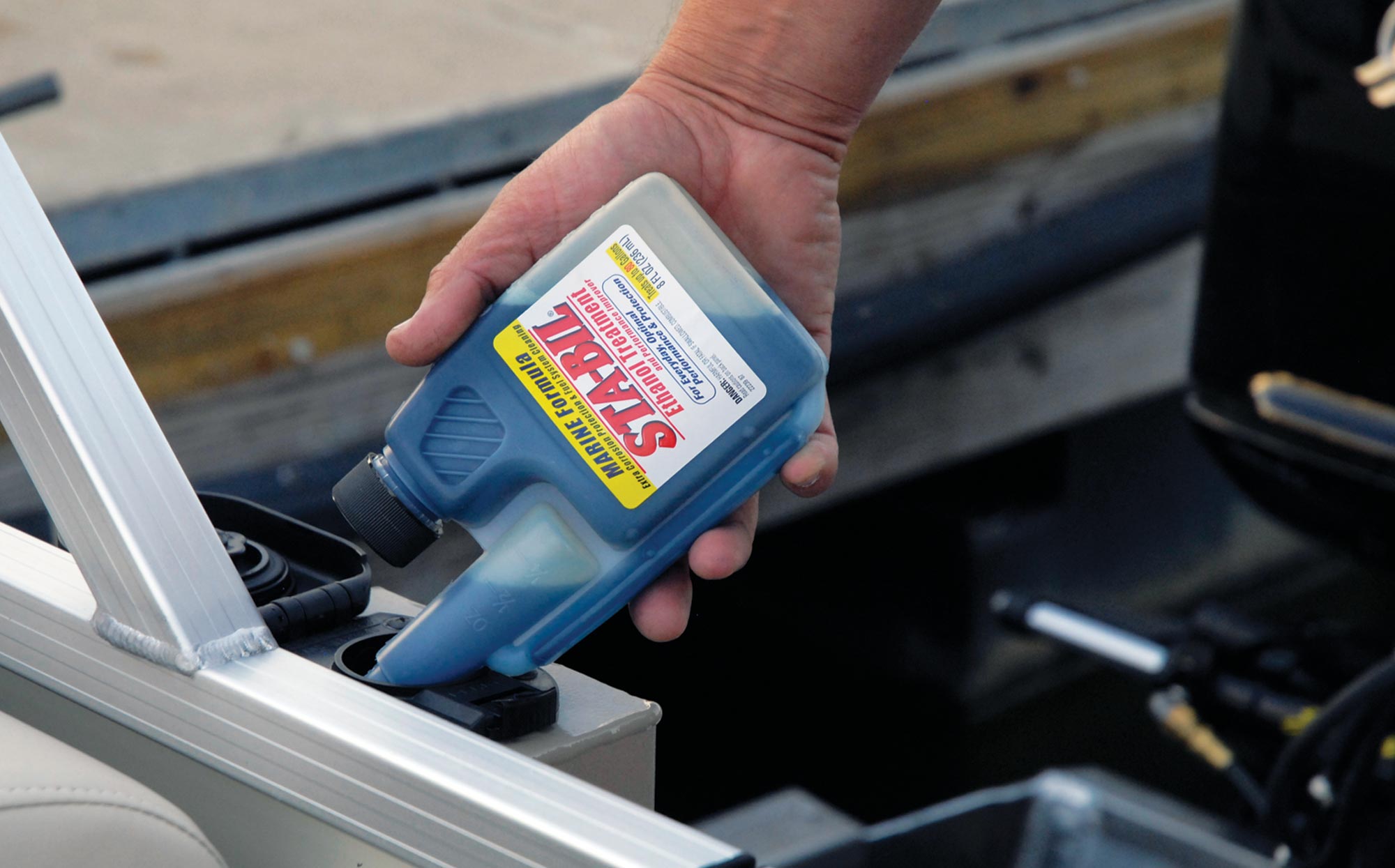
Ethanol also attracts and binds with water, potentially leading to a devastating reaction called fuel phase separation, where the water and ethanol blend together and sink to the bottom of the tank, ruining the fuel entirely. When phase separation occurs, there’s a long and exhaustive process to repair the fuel, otherwise it’s unusable. To reduce the risk of phase separation, many marine additives have special formulas to remove the water from the tank using demulsifiers that bind to the water and help it filter out through the engine without causing phase separation. While phase separation usually takes months to occur, making it a primarily storage-centered problem, it’s a good idea to get in the habit of preventing the risk. One fuel additive with strong water-removing properties is STA-BIL 360 MARINE sold by Gold Eagle.
Also, most additives offer a variety of features to cover all of your needs. They’re generally not compatible with one another unless explicitly stated by the manufacturer, and mixing fuel additives can potentially cause more harm than good when done without clear guidance. Manufacturers intend to provide simple, powerful solutions with clear applications. When in doubt, you can always place a call to your dealership or seek advice from trusted outlets such as boating forums and clubs where seasoned hobbyists and maintenance professionals can help you find your way.
