


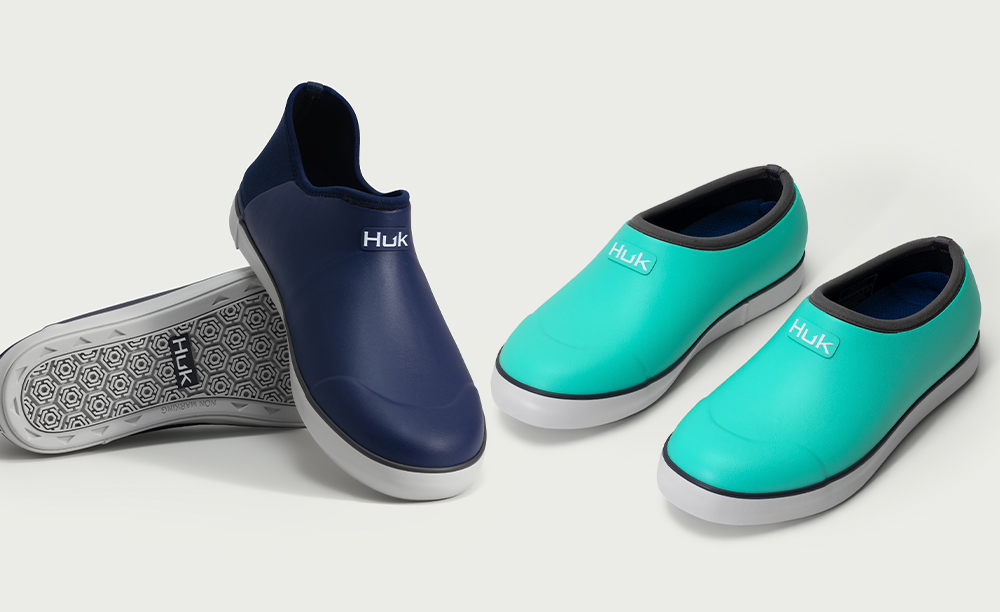
The Women’s Rogue Wave Clog blends an easy slide-on silhouette ideal for quick transitions with comfortable, waterproof performance designed for all-day wear. The neoprene-rubber upper and durable rubber sole provide a flexible, waterproof barrier, perfect for wet and messy conditions at the dock or in the garden. The non-marking Grip-X outsole pattern delivers superior traction on slippery surfaces, ensuring stability and confidence with every step. (www.huk.com)


Six Tips For A Healthy Release
By Dan Armitage
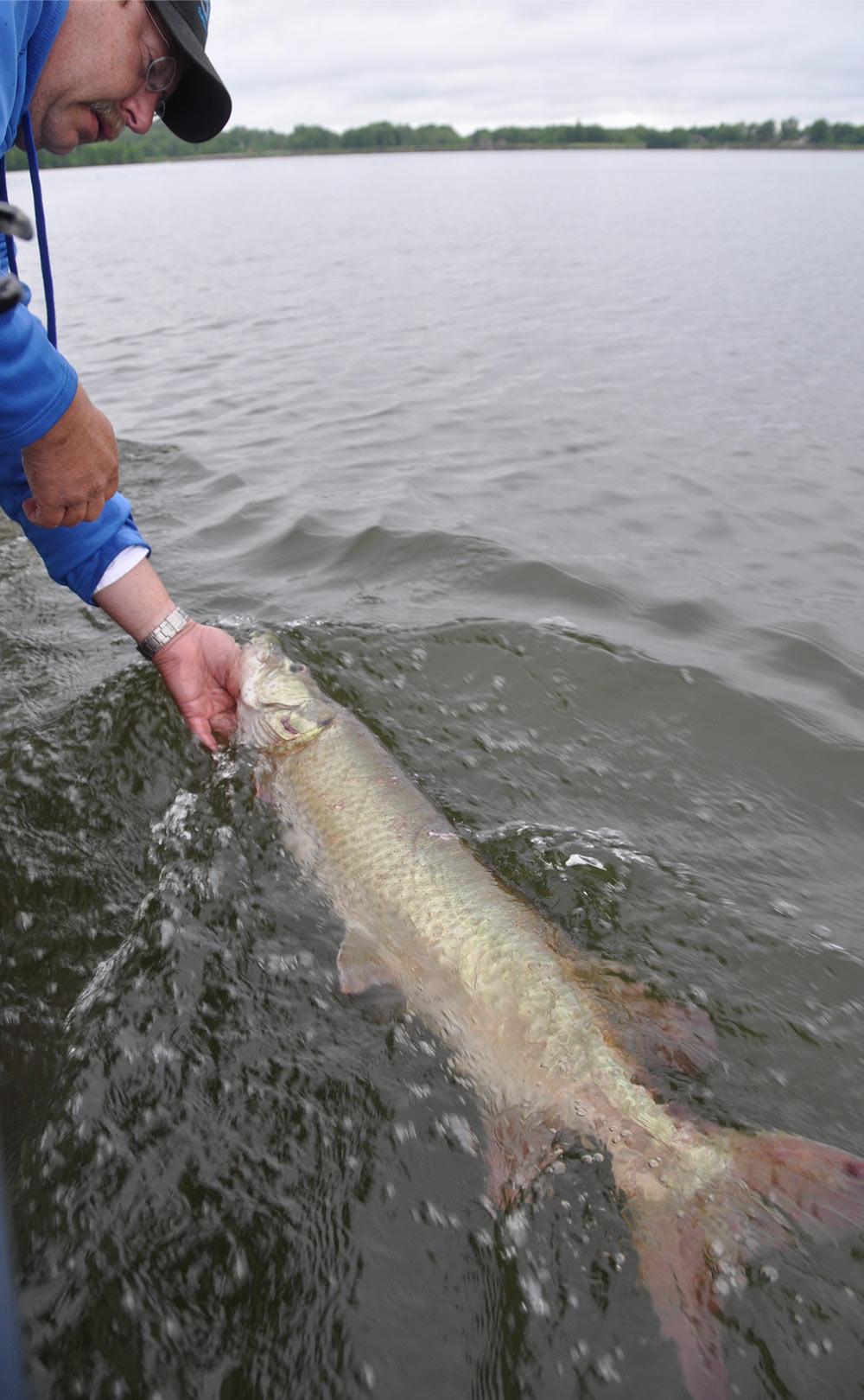
If you intend to release a fish you have just netted or brought to the side of the boat, try to unhook it while the fish remains in the water. In the water or out, handling fish properly protects both you and the fish. Some fish have sharp fins or teeth that can cut you if you don’t hold them correctly, and different fish species should be handled in different ways. You can hold some fish, like bass, catfish and trout, by the jaw while supporting the body with the other hand; you can hold other toothy species, such as pike or walleye, by the body alone. If you must remove the fish from the water to unhook it, consider these six tips:
1. Always wet your hands first before handling fish. Wet hands are less likely to damage the protective coating of mucus on the outside of the fish, the slimy layer that helps protect the fish’s skin from disease and makes it glide easily in the water.
2. Never put your fingers in the gills or eye sockets of your catch.
3. Carry a hook disgorger or needle-nosed pliers to help remove hooks from the fish.
4. Never pull a hook from the fish’s throat or stomach. It is better to cut the line as close to the hook as possible and allow the hook to rust away or work its way out on its own than to risk injuring the fish by digging the hook out of its throat.
5. Don’t allow the fish to flop around on the bank, the dock, or the floor of the boat.
6. Remove the hook as soon as possible, then gently lower the fish into the water and support it until it begins to swim away. If it isn’t ready to swim, you may need to slowly move it back and forth in the water to help revive it.



Where’s The Paddle?

Rich Christensen, Townville, S.C.
Ken Braun, Hartford, Wis.
Marcus Rosehill, Kaneohe, Hawaii
Tobias Reigns, West Chester, Ohio
As soon as you find the paddle, email its location, your name, and hometown to paddle@pdbmagazine.com. Paddle on!

Powerfully clean gelcoat, clear coat, paint, metal and rubber with Brite Wash. The highly concentrated boat soap is safe to use on delicate surfaces and cuts through dirt, bird droppings, and salt without stripping wax or leaving unsightly spots behind. Seal in the clean and keep your boat looking its best for months with Shurhold Pro Polish Wax & Sealant. By forming a chemical bond with the gelcoat, paint and vinyl, the sealant fills in microscopic pores to leave a harder, longer-lasting shine and protect against UV rays. (www.shurhold.com)
Win your next dad joke contest with these terrible boat jokes in honor of Father’s Day this month. If you think of better ones, please share them with us at PDB@pdbmagazine.com.
-
I used to have a fear of boats, but that ship has sailed.
-
I’m not one for buoyancy, but whatever floats your boat.
-
Old sailors never die, they just get a little dinghy.
-
Which type of vegetable is banned on ships? –Leeks!
-
What’s a pirate’s favorite letter? –Aye, you may think it’s the RRRRR, but it’s the C that they’re in love with!
-
When the bottom of a ship gets a hole, it’s one hull of a problem.
-
When the captain’s ship ran aground, he couldn’t fathom why.
-
Why did the admiral decide against buying a new hat? –He was worried about cap sizing
-
Why is pirating addictive? –Once ye lose yer first hand, ye get hooked!
-
I can’t think of any more boat puns. Canoe?