

My love for art led me to school at the College for Creative Studies in Detroit, Mich., where I majored in Transportation Design. Out of college, I landed a dream job at General Motors as a digital sculptor for the Cadillac Studio. But after a few years, the passion just was not there for me. I needed to get back into what I truly loved: the marine industry. My fiancée and I moved down to Abilene, Texas, where I started my new career with Tige Boats. I loved working with that crew and got to design some of the coolest boats in the industry. However, life happens, and as my family grew, we decided to move back to Michigan to be closer to my wife’s family. I was able to get a job with Manitou Pontoon Boats and really enjoyed the challenge of designing for the pontoon industry. You wouldn’t think that it would be that difficult; it is just some couches on a platform, right? The real challenge is designing different layouts for different models in multiple lengths while balancing configuration, ease of production, and allowing the customer the freedom to create the boat for them.
Then Covid happened.
I had to evaluate what I wanted in the next steps of my career. I decided to take a leap of faith and launch Slepica Studio. The mission is to design and customize boats, not just for the OEMs, but directly for the customer. I wanted to use my industry knowledge and supplier connections to create quality custom boats.
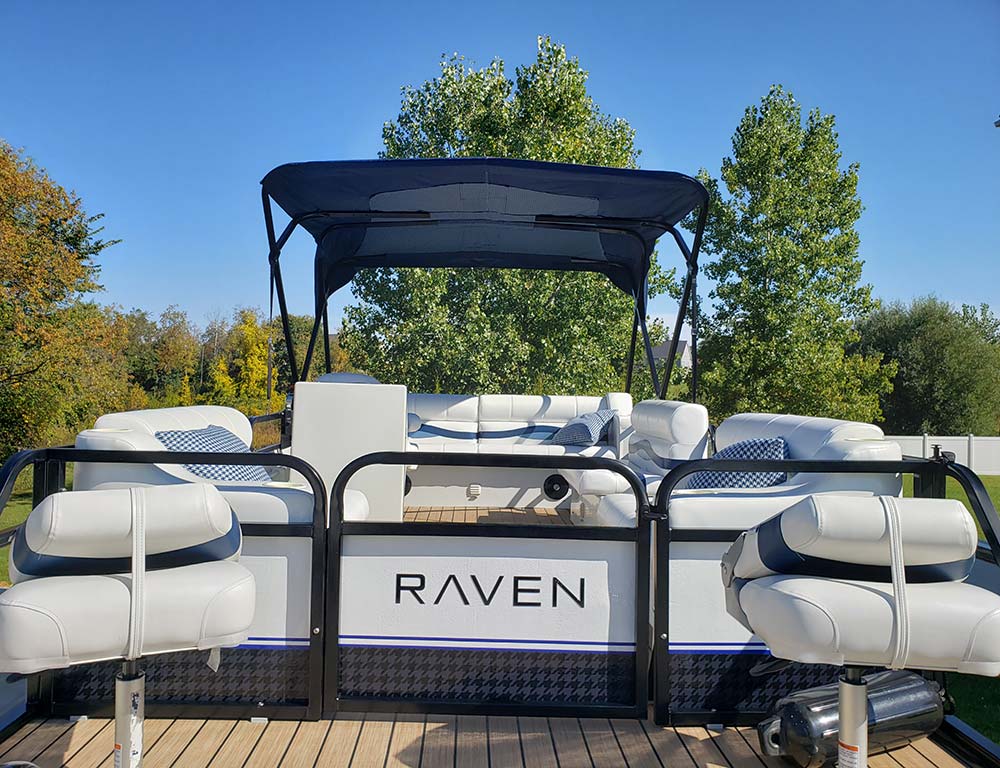
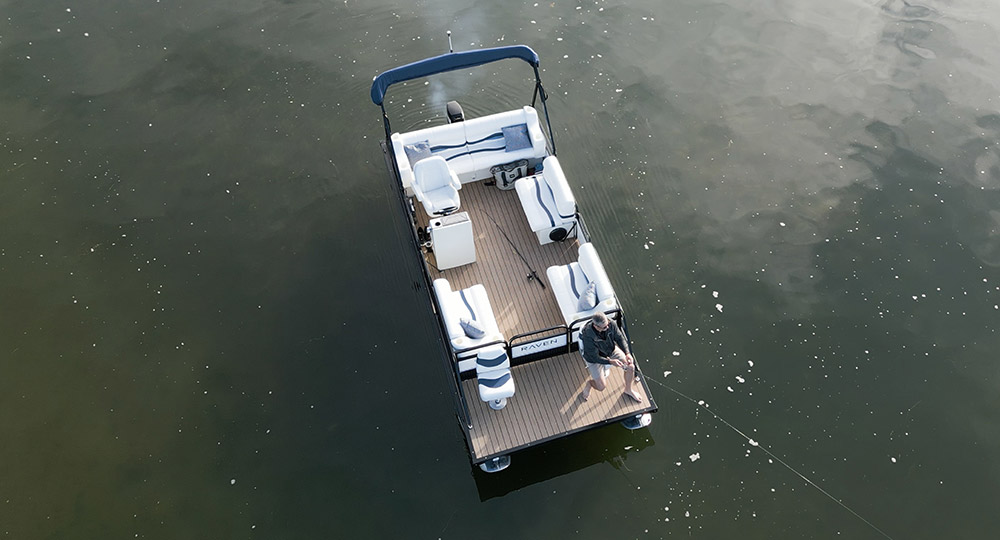
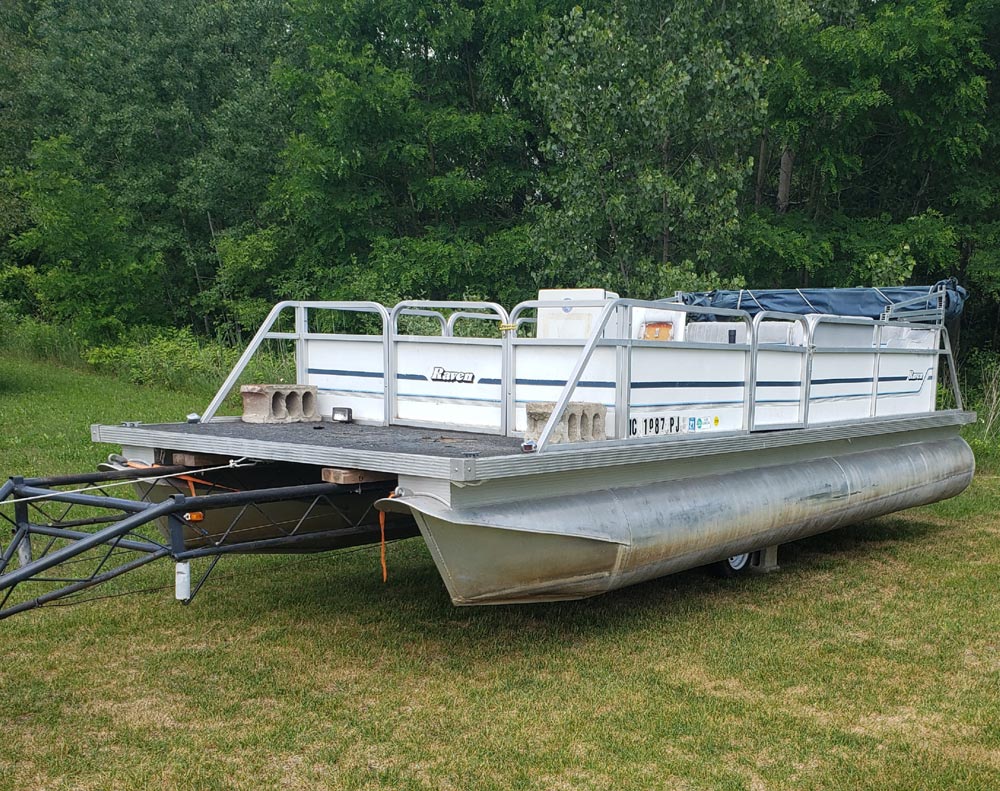
I later discovered that the Raven brand originally operated out of Alma, Mich., and had long since gone out of business. My goal was to bring this forgotten model back to life with modern touches and a unique aesthetic that still complemented the boat’s original lines.
I started, as I do with every professional project, with a sketch. It took a few ideations before I landed on a vision that I liked. Sketching it was the easy part; now I had to figure out how to actually build it. I was always a visual person, but never had the hands-on mechanical experience. So, I did what many other passionate DIYers do: I dove in and figured it out as I went.
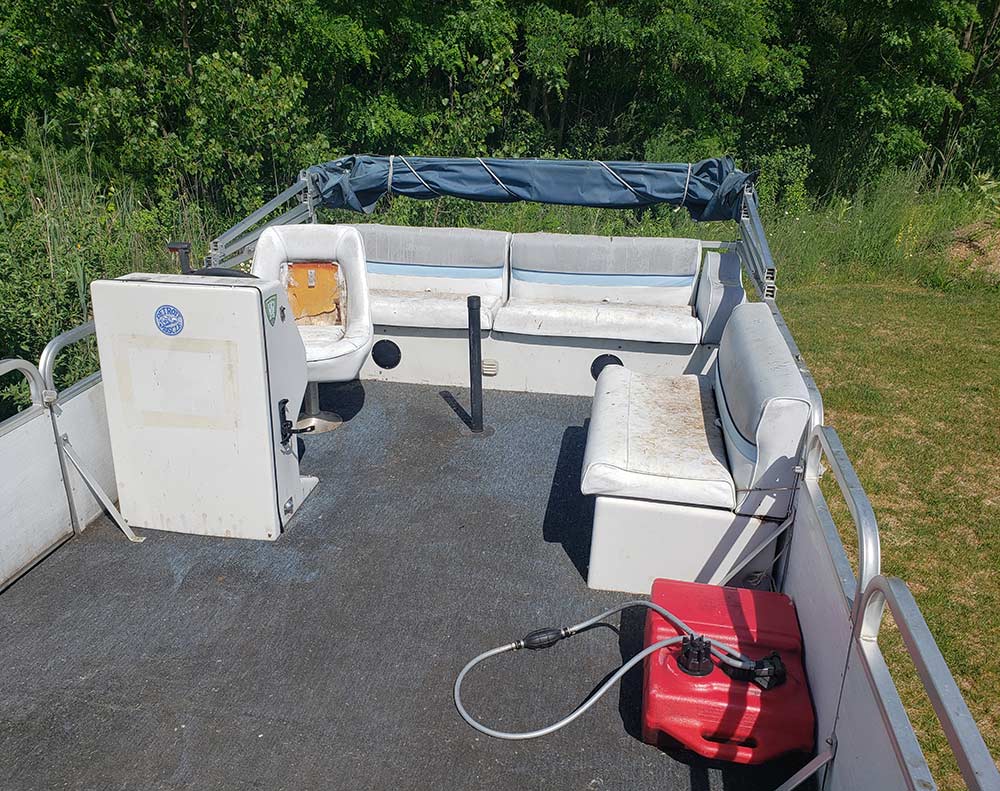
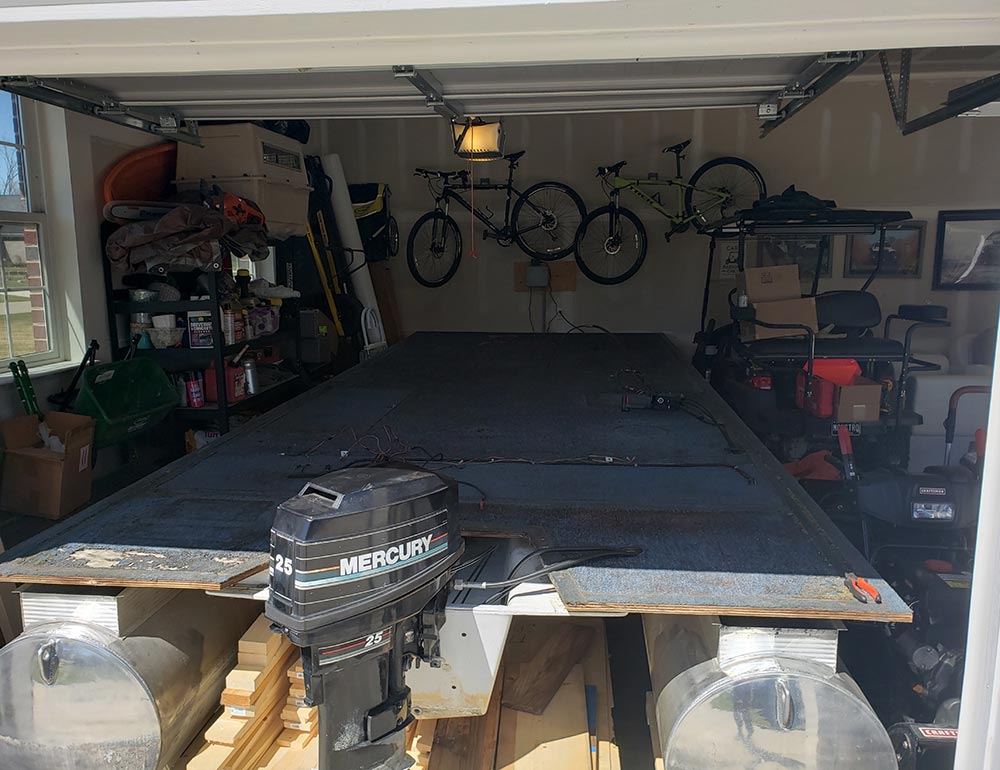
Next came the teardown process, documenting everything along the way. Bolts, wires, and any old parts were labeled and organized. The seats were falling apart, the foam was crumbling, the wood was waterlogged, and the floor was peeling away. The walls and Bimini frame were shipped out for powder coating. Everything was brought down to the aluminum frame so I could build it back up.
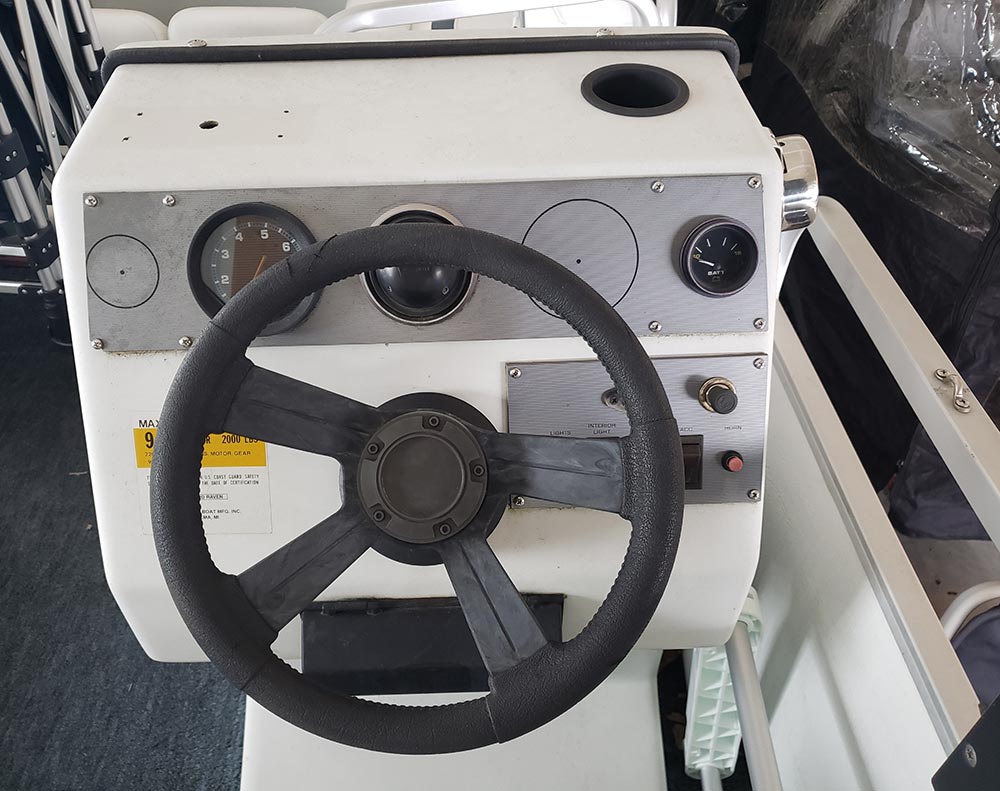
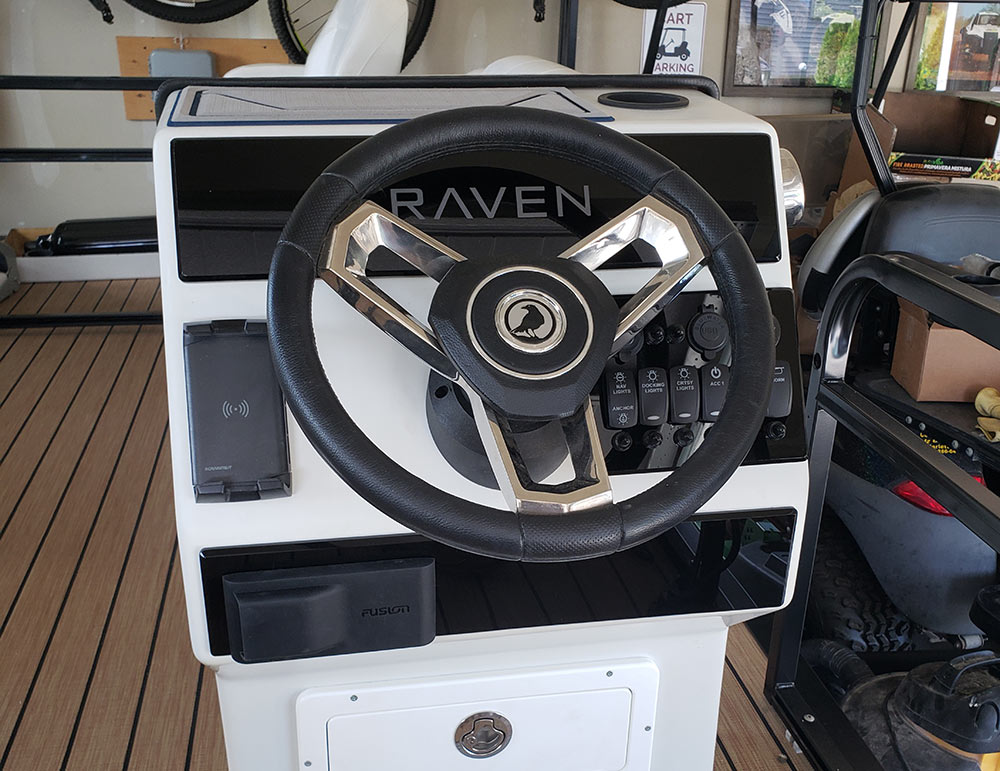
For the fabric elements, I went custom. I selected a classic houndstooth pattern for the Bimini canvas and carried that motif into the throw pillows and custom wall graphics, tying the entire design aesthetic together. I preserved the original fiberglass helm structure but modernized it with a new steering wheel, a custom center cap wheel emblem, integrated wireless phone charging, and crisp marine rocker switches.
The original 25hp Mercury outboard surprisingly didn’t need a total overhaul. With a little Sea Foam motor treatment, fresh spark plugs, and clean gas, she purred back to life. I painted the engine cowling and applied fresh graphics that perfectly matched the exterior wall wrap. This wrapped it up and made it feel like a brand-new modern pontoon that could still be around today.
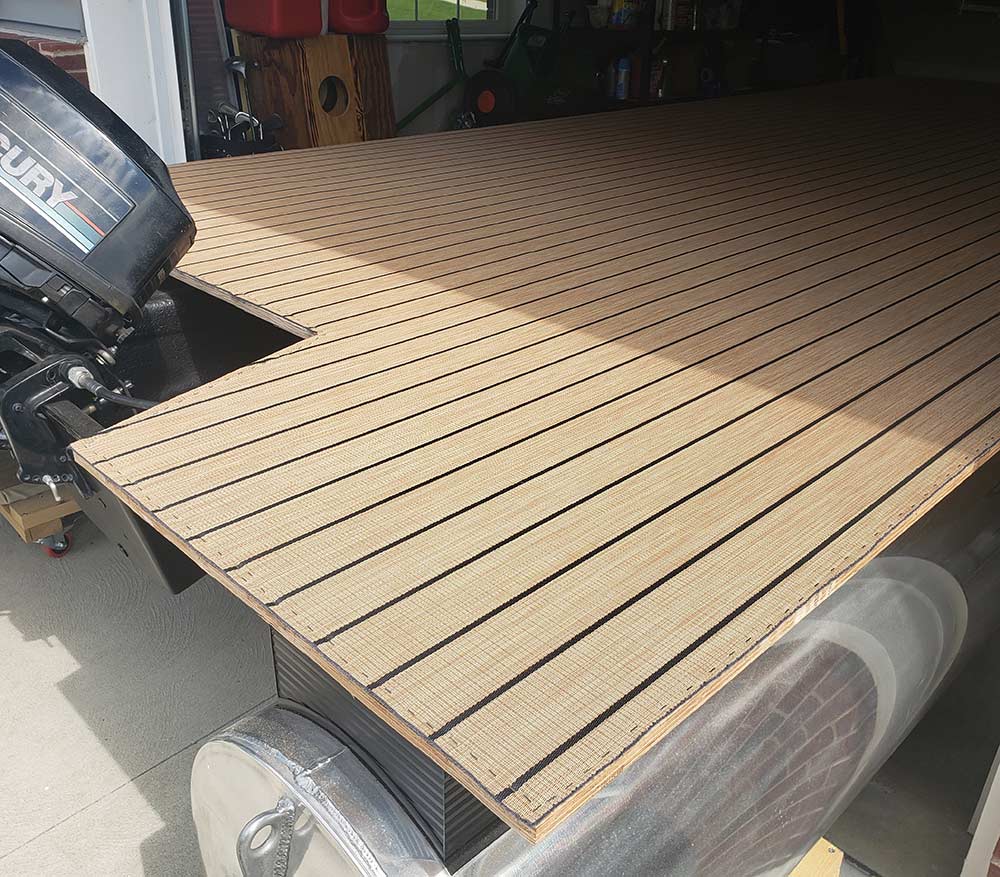
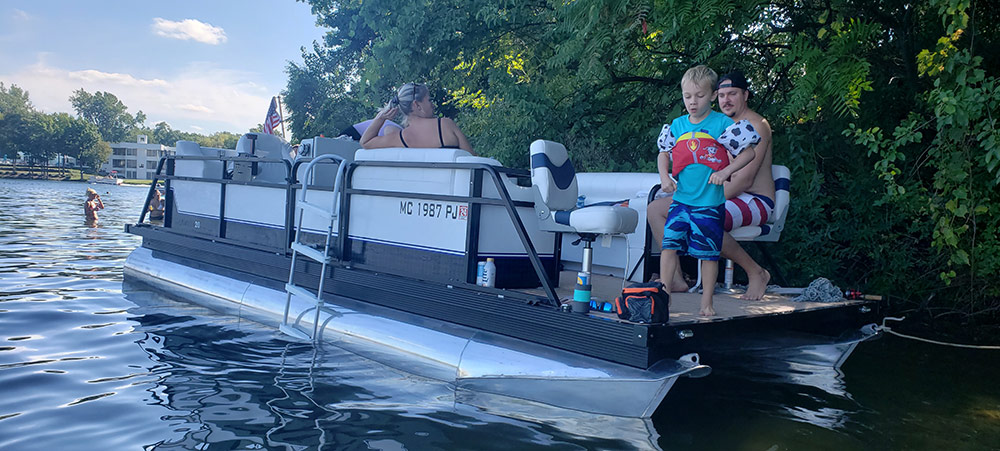
This was a “budget” project, and I have since sold it to the Keller family in Ohio. I have continued to upgrade my boats just about every year and add my own touches to make each one unique.
Recently, I accepted a full-time position with my long-term client, Avalon Pontoons, but I continue to support custom builds for retail customers through my studio in White Lake, Mich. I love helping all of my clients design and build the exact boats they want. Because at the end of the day, we aren’t just building boats—we are building the platforms where families create lifelong memories.
For More Information