


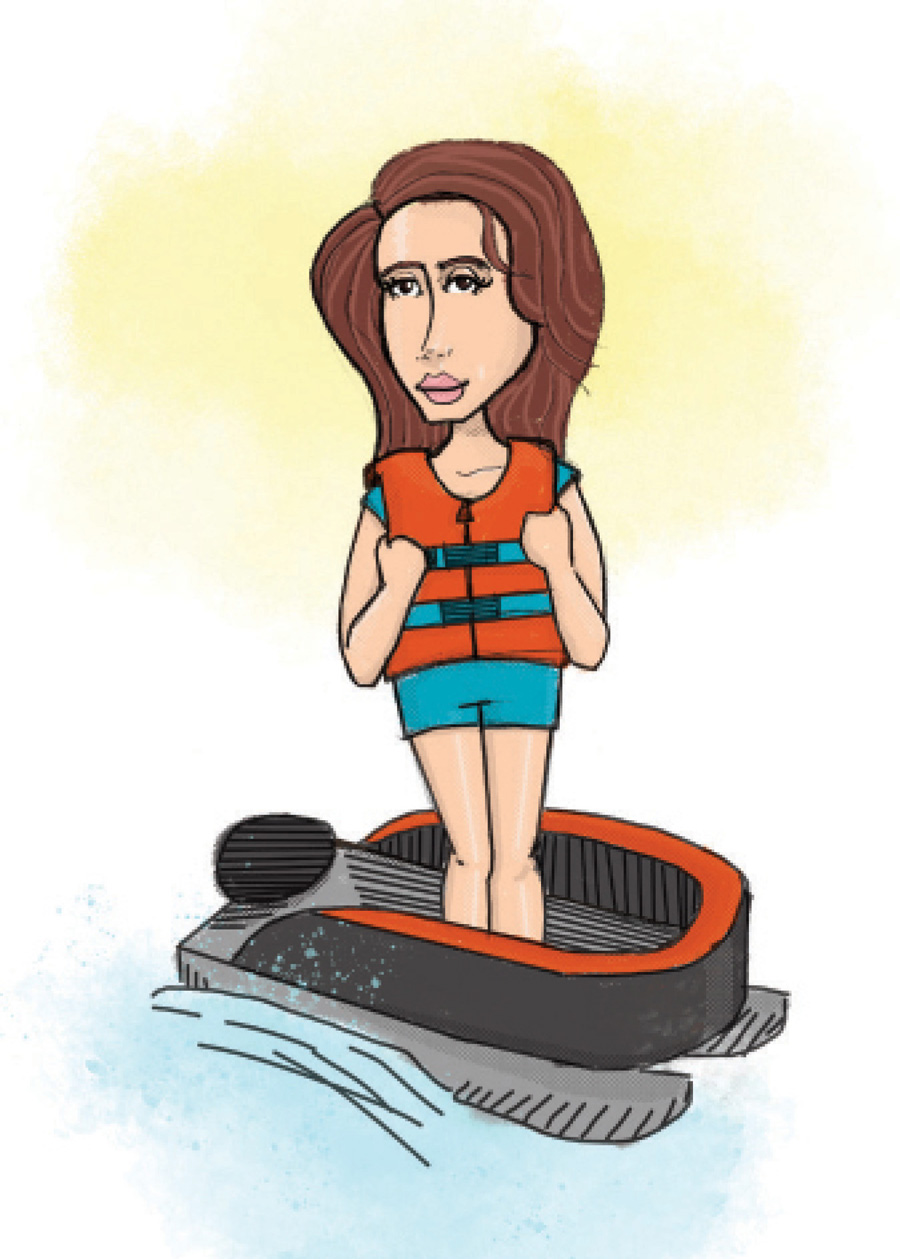
And while every boater I know would agree that pristine lakes are the best kind, these people also tend to let gallons of old motor oil pile up in their garage and proclaim that anything dropped overboard—from potato chips to a windblown paper plate—is “with the fishes now.”
But imagine if the fish operated this way. Suppose a trout swam into your living room and dropped three worms, half a crawdad, and something mysterious from the bottom of the lake onto your carpet.
You would not say, “Excellent. Nature has provided.” You would call somebody.
Then there is fueling. I once witnessed a person fueling up at the dock who looked like they were watering a houseplant during an earthquake. Sure, sometimes we may accidentally spill a few drops of gasoline, but if your fueling technique results in a rainbow slick visible from space, it may be time to start being more careful.
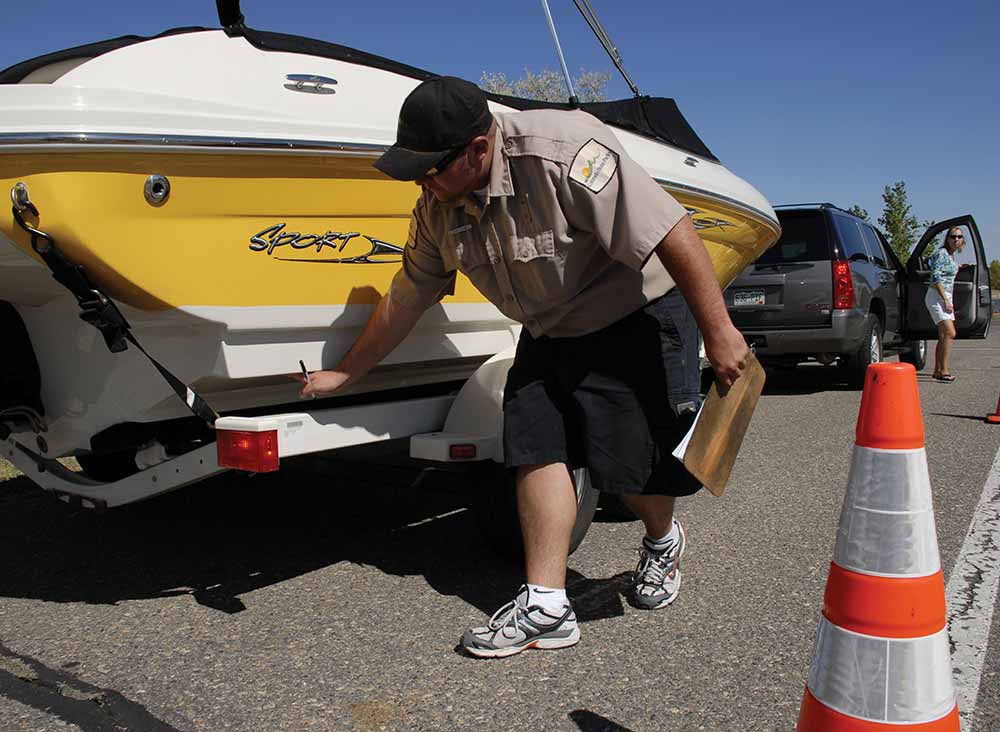
Being eco-friendly also means paying attention to invasive species, which is why many lakes now require boat inspections. Invasive mussels and aquatic plants spread by hitchhiking from one waterway to another with a travel strategy most tourists can only admire. They go everywhere without paying for gas, hotels, or marina fees.
That’s why cleaning your boat matters—so you’re not the one responsible for introducing an invasive species to a lake. Imagine the embarrassment if you were the source, and forever after your boating friends laughed, “Remember when Becky accidentally introduced zebra mussels to our lake?”
Earlier this summer, my kids and I spotted a mom and baby moose on the shoreline; the kids begged to get closer. And then closer. At which point, the moose hightailed it out of there and we lost our afternoon entertainment.
After all, the goal is to observe nature, not audition for a documentary called “Poor Decisions on the Water.” And honestly, your cell phone isn’t going to take such a great photo anyway. Soak up the memory of seeing wildlife in the wild and forget about getting close enough to take a selfie with an animal that could kill you (or you it).
The funny thing is that most environmentally-friendly boating habits are also common-sense habits, even if they make you occasionally resist your natural instincts.
Don’t throw things overboard, don’t spill fuel or spread invasive species, and don’t terrify the wildlife. These are not exactly radical concepts—they’re the environmental equivalent of “wear pants in public.”
And when thousands of boaters each do a little bit, lakes and rivers stay cleaner, healthier, and more enjoyable for everyone, including the fish who don’t deserve to live in our garbage.
So the next time you’re out on the water, remember that being environmentally responsible doesn’t require you to hug trees or memorize scientific terminology. It’s about leaving the lake in better shape than you found it.
Because if future generations have to cruise across lakes filled with floating trash, where would they throw their potato chips? Nowhere, hopefully. And that’s the point.