


By Rebecca Blackson
Ready To Tuck Your Boat In For The Season?
Easy steps to prep your boat for winter
Before I became a boat owner, my winterizing routine included topping off my van’s windshield wiper fluid and tearing out the spent pumpkin vines from the garden. Now that I’ve added a pontoon boat to my list of happy possessions, things are a bit more complicated. But still doable!
Here’s a simple checklist on how to prepare your boat for winter storage, whether you’re keeping it on your towing trailer or taking it out of the marina for the first time since your spring launch.
Clean & Dry Everything
Ironically, the thing that can cause the most damage to your boat is water. So wherever you’re choosing to overwinter your boat, make sure your boat is fully cleaned, dried, and winterized before temperatures drop.
Drain the bilge, water tanks, head, and livewells, as well as anything else that may hold water, such as a misting system. Thoroughly clean the interior and exterior of the boat to prevent mold and mildew. Empty storage compartments, remove all trash, vacuum up the sand, and don’t forget those moldy old beach towels. Spray off the hull with an acid-based cleaner if needed and consider polishing the pontoons and giving painted surfaces a coat of wax.
Prep The Engine
Flush both the engine and the coolant system with fresh water to remove existing salt, dirt and corrosion. Make sure to drain all water. See your owner’s manual for specific instructions and complete fogging if needed. Depending on the type of engine and cooling system, you may need to add antifreeze. Change the oil in the engine and add an oil stabilizer especially for marine engines. This will give an added layer of protection from dry starts and excess friction when you first launch in the spring.


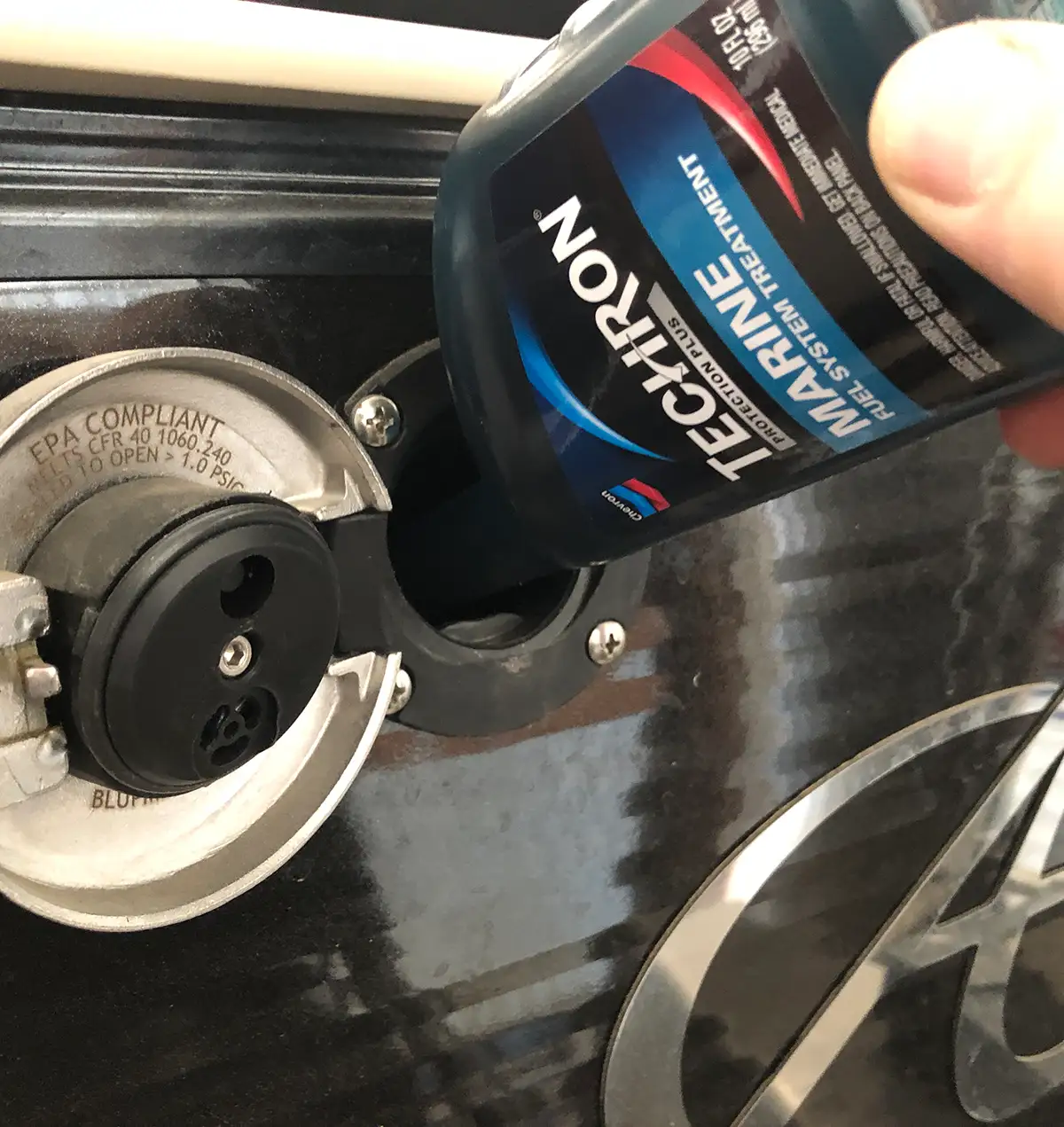

Stabilize The Fuel System
During your last fill up, add a fuel stabilizer to preserve both the fuel and the fuel tank for the upcoming months. Fuel stabilizers will clean and lubricate fuel pumps, carburetors, injectors and compression rings. Fill your gas tank to 90 percent capacity, which will prevent excess water condensation building up during storage. Run the engine, checking the timing and basic operations. This will also help distribute the fuel stabilizer throughout the fuel system.
Remove Battery & Electronics
Extreme cold can lead to cracked or drained marine batteries, so store them in a warm, dry place along with any removable electronics. This will protect them from the elements and extend their lives.
Cover Your Vessel
Protect your boat from animals, debris, and the weather with a good cover. Cheap tarps can often do more harm than good, often tearing under the weight of snow or causing wear on surfaces with their abrasive filaments. If your boat came with a cover, make sure it’s adequate for your area and will protect your boat while still allowing a bit of breathability to avoid moisture buildup and mildew. Often, it’s a good idea to place any cushions on an edge or lifted up with small blocks so there can be airflow over more surfaces and into storage compartments.
Don’t Delay
Be careful not to wait too long to prep your boat for winter, or you may find yourself standing in the snow, tempted to skip a few important steps. Tuck your boat in well so it’s clean and ready for your adventures next spring. It’ll be here before you know it!