

Tackle Box logo
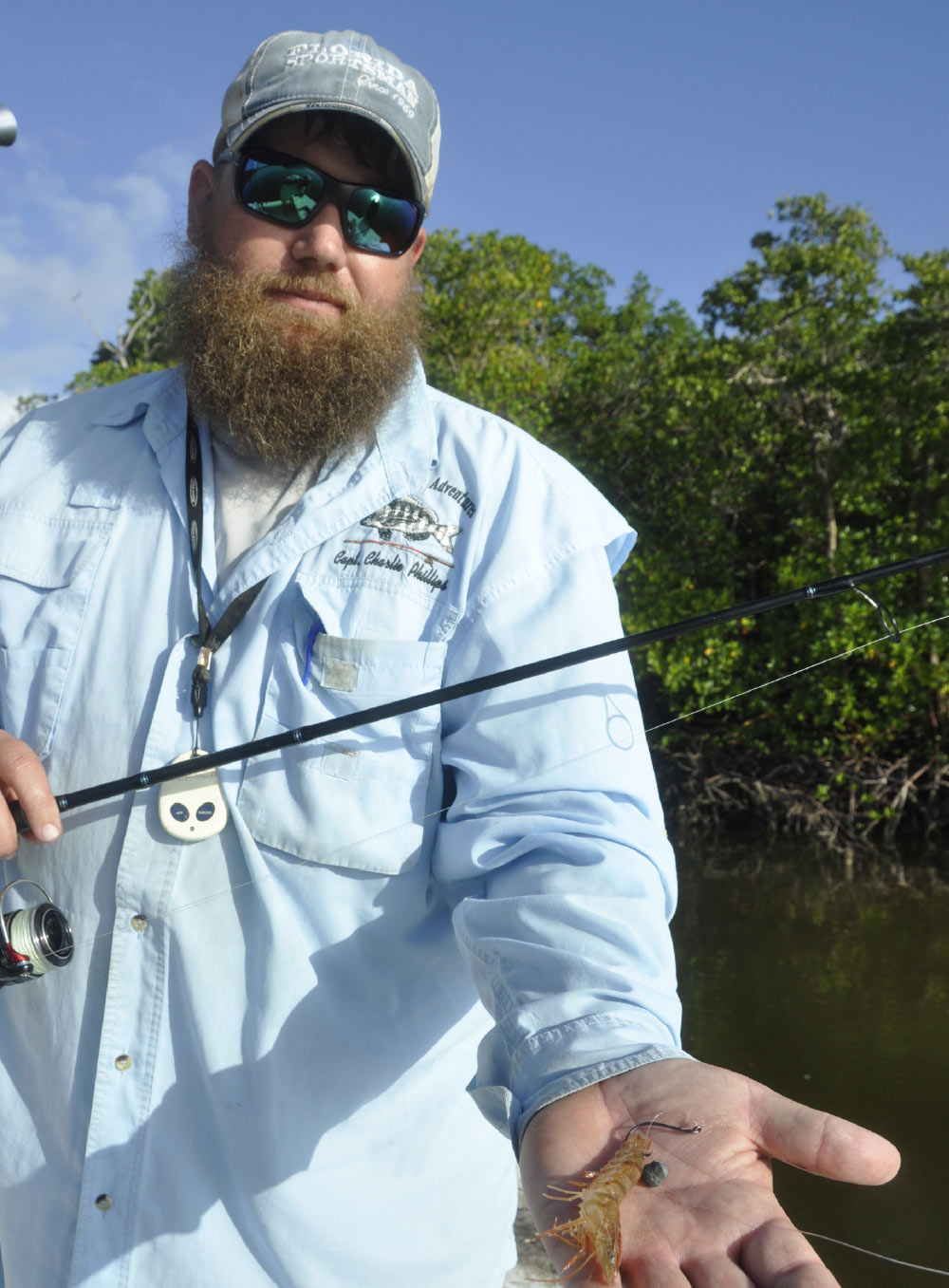
A circle hook is the preferred type for many coastal anglers using live shrimp as bait in the near-shore brine.
BY DAN ARMITAGE
Hooking-Up
A circle hook is the preferred type for many coastal anglers using live shrimp as bait in the near-shore brine.
A low-angle, vertical photograph of a bearded man with mirrored sunglasses and a baseball cap holding a fishing rod and a small shrimp in his open palm.
When heading out to angle open water, you want to make sure your safety gear is up to snuff and easy to access.
If you didn’t hook-up with as many fish this season as you expected, it could be as simple as your choice of, well, your hook. Most anglers don’t know an Aberdeen from a Kahle and frankly don’t care; as long as there’s a bend and a pointed barb at one end and an eye at the other, they figure any hook that will fit in its mouth will catch the fish they chase.

I offer a basic primer here. For most of my angling career I felt pretty much the same way – and still do – to some degree. But there are some situations where having the right hook can mean the difference between having fresh fillets or frozen sticks for your fish dinner. We’re talking meat fishing here, when you are serious about catching fish and plan to keep what you land for the dinner table. In many cases, when you simply must catch fish, that means using live bait as your primary lure.

That said, I hesitate to recommend using live bait when you intend to catch and release the fish you fool. Angling with live bait is more akin to feeding the fish with the real thing, rather than fooling them with something they are more likely to spit out than swallow. And anyone who has had to dig a barb out of the gullet of a fish that they had no intention of keeping – let alone killing – knows that fish that hit live bait tend to be hooked more deeply than those who are fooled by artificials.

The hook represents “where the rubber meets the road” angling-wise; your real connection to the fish you will fight and eventually hope to swing over the side of your deck or pontoon boat. But before you can get there, you need to consider that the hook first must hold the bait that draws the gamefish to the table. Not only must the hook secure the bait in place at the end of your fishing line, to be effective it usually must do so while allowing the live offering to look as natural as possible.

Depending on what type of live bait you are presenting, there are four hook types that do that, styles that serious bait-dunkers might want to consider, for both fresh- and saltwater fishing.
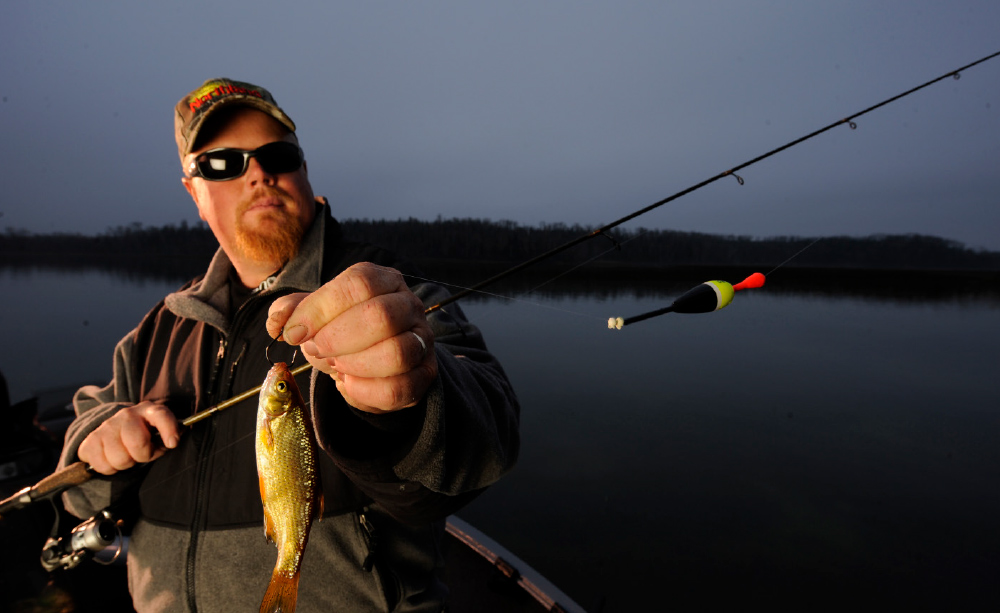
A wide-angle, horizontal photograph of a man on a boat, holding a fishing rod with a small fish on the hook.
Using the correct style hook is key to the effectiveness of any live bait presentation, including shiners under a float.
Aberdeen
The most common fishing hook for use with live bait such as minnows is the Aberdeen style, which is often made of gold-colored wire and features a long shank with symmetrical bend. The narrow-diameter wire permits easy penetration through a baitfish’s lips, skin or fin, and the hook’s light weight allows the bait to swim more naturally. The light wire also straightens under pressure, which often allows the angler to pull the rig free from snags without breaking the line, and the long shank makes hook grasping and removal easier. Light wire Aberdeens are a great choice when fishing with minnows around cover – or with kids – for those two reasons alone.
Bait holder
An extra pair of barbs built into the bait-holder hook’s shank make this popular style a great choice for holding worms on the hook. The worm or nightcrawler can be threaded onto the hook allowing one or both ends of the bait free to wiggle and attract finicky fish while suspended under a bobber or fishing on the bottom with less threat of it sliding down into the hook’s bend and appearing unnatural. Used while trolling, casting or drifting, the bait-holder can securely clasp the head of the worm, allowing the tail to trail behind while keeping the moving bait from spinning.
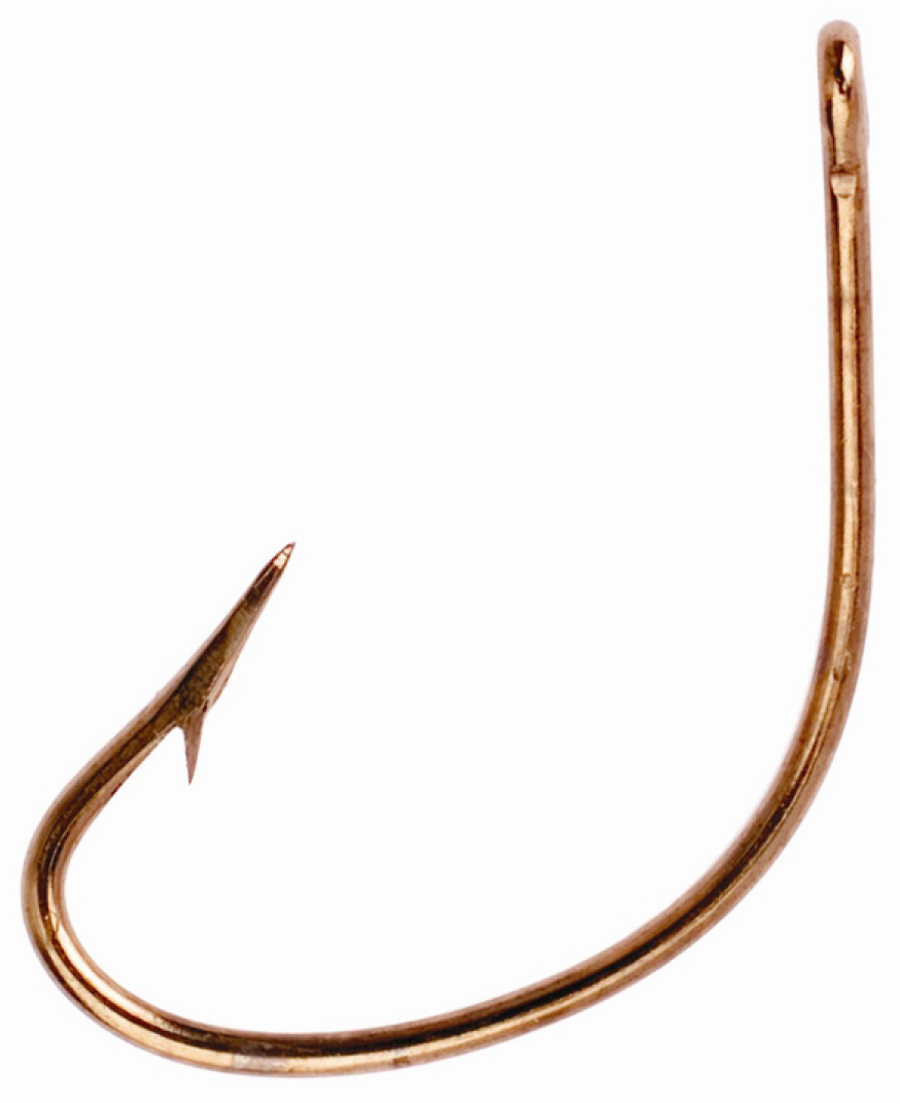
closeup of fishing hook
Circle
The talon-like curved point and wide mouth of the Circle hook was developed by commercial anglers using multi-line rigs to hook and hold fish without benefit of a conventional hookset. The design allows the hook to turn and catch in the corner of a fish’s mouth as it swims off, which makes for a firm hold and an easy release. Circle hooks can be used with minnows, worms or other presentations such as cut or prepared baits and is a popular choice among fishermen targeting bottom-feeders such as catfish.
Kahle
Made of wire formed into a large gap with a barbed point bent in toward a short shank, the Kahle is designed for use with larger live baits such as shiners, crayfish and frogs. The exaggerated curve of the hook’s throat helps keep lively baits impaled – and the barb in the gamefish’s maw once the hook has been set and the fight is on. The Kahle is also popular among anglers offering soft plastic artificial baits.

No matter what style hook you use for live bait presentations, make sure it isn’t too big for the job. You can fool and catch a big fish with a small hook, but even the dinks won’t give it a second look if the bait’s size and action are overwhelmed by a hook that is too large or too heavy or both to allow the critter at the end of your line to shake its booty.

Dan’s Pick
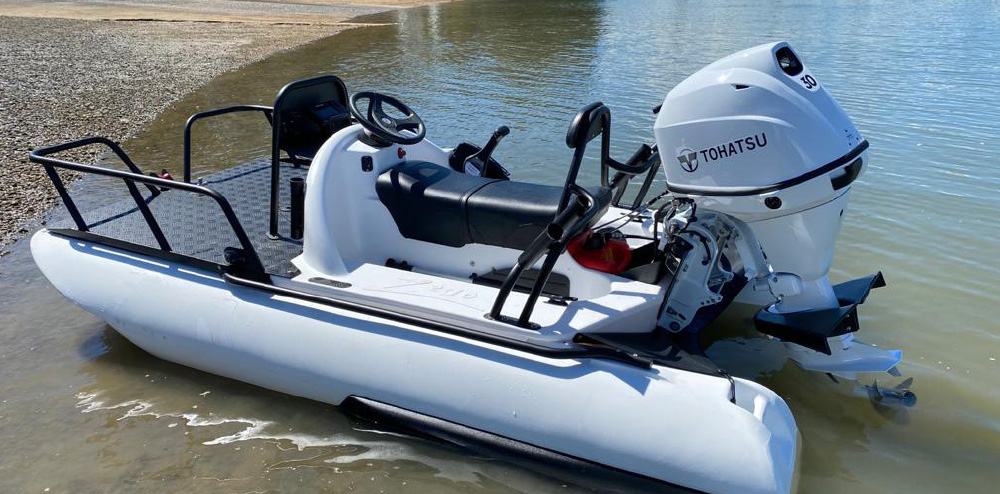
Zego Sports Boats Model 300 boat
Zego Sports Boats Model 300
Manufactured and assembled in Cobourg, Ontario, Canada, these unique pontoon-style outboard boats cater to anglers who want a stable fishing platform that can easily be launched, retrieved and enjoyed by one person without the need for conventional launch ramps – or as a fun fishing tender for larger craft. The Zego 300’s twin hulls are made of 8mm rotomolded HDPE plastic and foam-filled, which means that the craft is virtually unsinkable, and designed to allow the anglers to stand up on the bow deck. Standard accessories include rod holders built into the backrest, a 12-liter built-in fuel tank, under seat storage, dedicated anchor locker, and Teleflex steering covered by a 10-year structural warranty. Angling upgrade options include a color depth sounder, VHF radio, gaff/paddle, compass, and a Bimini top.

Take a peek at the website, then try to tell me you wouldn’t love to head for the horizon to drown a few worms from the 300 and then take the long way back to the dock.
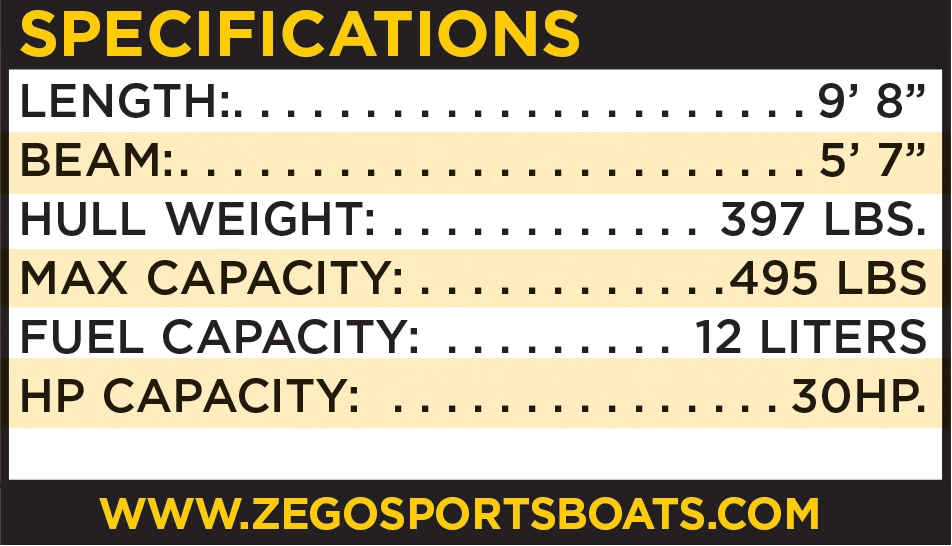
Zego Sports Boats Model 300 specs table